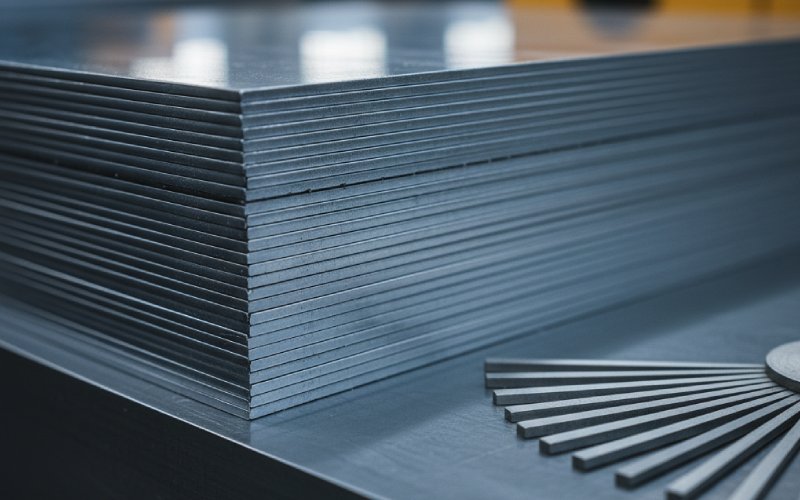
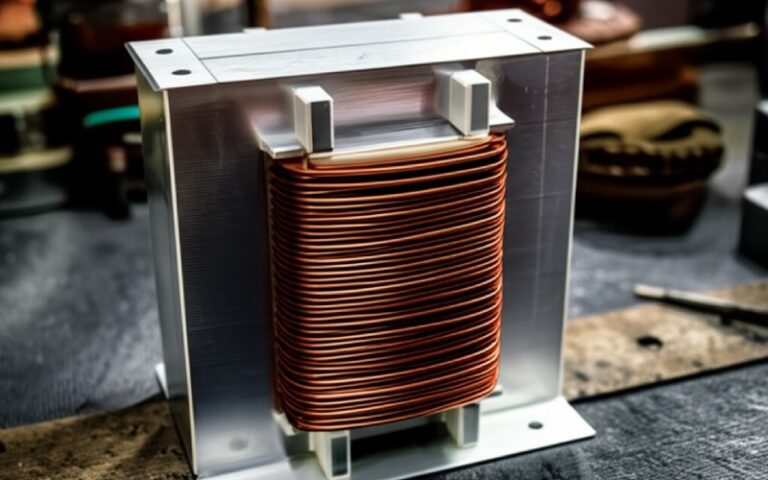
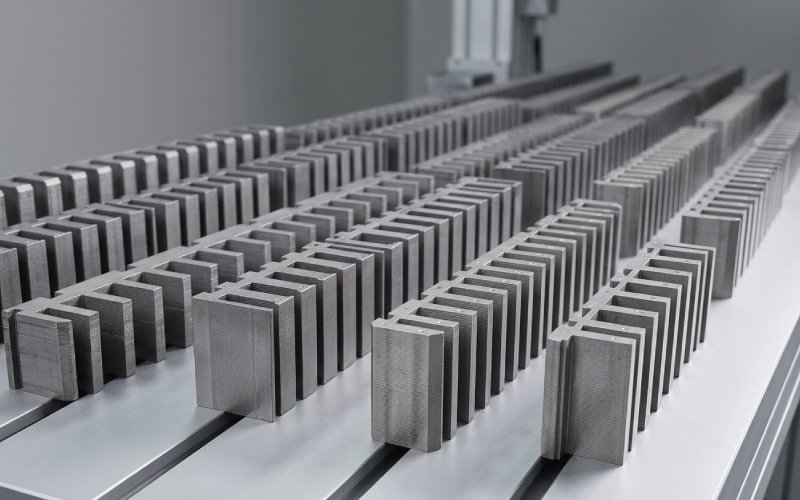
Sino의 라미네이션 스택으로 프로젝트에 힘을 실어주세요!

프로젝트 속도를 높이기 위해 라미네이션 스택에 다음과 같은 세부 정보를 레이블로 지정할 수 있습니다. 허용 오차, 재료, 표면 마감, 산화 단열재가 필요한지 여부, 수량등 다양한 기능을 제공합니다.

CRGO lamination slit width tolerance: how it affects core build and losses

목차


1. Why slit width tolerance suddenly matters when you’re staring at a crooked core

On paper, “Width: 0–230 mm, +0.00 / –0.20 mm” looks harmless. Just another line in a tolerance table.

On the shop floor, that same line is the difference between:

  • a core that stacks square in one pass,
  • and a core that needs shimming, re-clamping, and a quiet argument between design and production about “why losses are 5% higher than the datasheet”.

CRGO grade and thickness get most of the attention. But once you’re already buying low-loss grades, the way your supplier slits and controls 라미네이션 width is one of the levers left that still moves build quality and no-load loss in a noticeable way. Suppliers themselves highlight tight width control and low burr as a core differentiator.

This article stays on that narrow strip of steel: slit width tolerance on CRGO laminations. How it travels from the coil, into the lamination stack, into air gaps, and finally into your watt loss and magnetizing current.


2. What “slit width tolerance” actually means in practice

You already know the formal definition; let’s anchor it to real numbers.

Typical lamination tolerance charts based on common standards specify something like:

  • Width 0–100 mm: +0.00 / –0.15 mm
  • 100–230 mm: +0.00 / –0.20 mm
  • 230–400 mm: +0.00 / –0.30 mm
  • 400–750 mm: +0.00 / –0.50 mm

Some suppliers quote broadly similar bands as ± values instead of +0/–x, and slit-coil producers for raw CRGO can have much looser coil-width tolerances (e.g. 0 to +2 mm on coil width).

That gives you three different “width realities” in your chain:

  1. Mother coil width tolerance – what the mill supplies.
  2. Slit coil width tolerance – after your lamination supplier slits down to several narrower coils.
  3. Cut lamination width tolerance – after cut-to-length / step-lap cutting.

Your drawing usually only talks about (3). Your supplier’s process capability decides how much of (1) and (2) leak into your stack.


CRGO strip slitting process

3. How width variation shows up during core build

Width tolerance doesn’t just shrink or expand the limb. It leaks into three places that matter:

3.1 Limb and yoke squareness

If limb laminations wander toward the lower end of tolerance while yoke laminations sit nearer nominal, step-lap joints stop lining up cleanly. You get:

  • small overhangs or recesses at each step,
  • little “wedges” of trapped air,
  • pressure concentrating on a few strips instead of the whole stack.

Several technical notes on lamination quality explicitly warn that dimensional errors (width, angle, camber) produce unwanted air gaps that raise no-load losses beyond what single-sheet tests predict.

3.2 Window geometry and frame fit

Even with tight clamping, real cores are slightly elastic systems. If one side limb is built from marginally narrower laminations, you get:

  • a barely visible taper across the window,
  • difficulty sliding the assembled coils into the core or vice versa,
  • shims added “just once” that then become standard practice.

This doesn’t only cost assembly time. Those improvised fixes often change the way the core is clamped and stressed, which feeds back into loss.

3.3 Stacking pattern and step-lap behaviour

In multi-step lap joints, width differences between lamination packets alter the overlap at each step. Instead of a smooth magnetic path, you get:

  • local flux crowding at some steps,
  • slightly larger effective gap at others,
  • more audible noise and less predictable magnetizing current.

Good step-lap design assumes consistent strip width. The more width drifts along the coil, the more the real joint drifts from what design simulated.


4. Direct area effect: the part most people overestimate

Engineers sometimes worry that “–0.2 mm width” will dramatically push up flux density. The raw area effect is usually small.

Take a simple case:

  • Design lamination width: 250.0 mm
  • Worst-case actual: 249.8 mm (–0.2 mm)
  • Same thickness, number of layers, stacking factor.

Area scales with width, so:

ΔA / A ≈ –0.2 / 250 = –0.08%

Flux density goes up by the same 0.08% for fixed volts and turns. If core loss around 1.7 T scales roughly with B^1.6, that’s only about 0.13% more loss from the width change alone.

So the pure cross-section change from width tolerance isn’t the big villain.

The villains are:

  • air gaps created or made worse by width mis-match,
  • non-uniform contact pressure and stress,
  • interaction with burr and camber.

Those are not captured by a simple ΔB calculation but are called out again and again as reasons assembled core loss exceeds single-sheet test loss.


Let’s walk through the chain in a more physical way.

5.1 Air gaps at joints

Width out-of-tolerance interacts with:

  • miter angle tolerance,
  • camber (edge curvature),
  • burr height.

If the yoke is slightly wider, its steps project beyond the limb stack. That creates local separations that clamping cannot fully close without crushing a few laminations harder than the rest.

Even small gaps drastically raise local reluctance. Technical notes on CRGO handling show that poorly cut angles and geometry variations at joints can raise total core loss by several percent over the intrinsic sheet loss, mainly through these extra gaps and distorted flux paths.

Width tolerance is the quiet co-conspirator in that scene.

5.2 Stress and coating breakdown

If the stack is slightly wedge-shaped due to width drift, clamping beams don’t load each lamination equally:

  • some strips see higher compressive stress,
  • others see barely enough pressure for good contact.

Higher pressure can locally damage the insulating coating, creating inter-laminar currents and extra eddy losses; too little pressure leaves air pockets. The same CRGO guidance documents talk about excessive clamping pressure and surface contamination as real-world loss multipliers on otherwise good material.

Width variation is one way you unintentionally create those stress hot and cold spots.

5.3 Flux direction and edge quality

Slitting is not only about width. The process also introduces residual stresses and can slightly disturb effective grain direction if the strip edge is not parallel to the rolling direction.

When width is poorly controlled, you tend to see:

  • more re-slitting and trimming operations,
  • more cases where laminations are cut near edge zones with worse properties.

So the practical bundle is: poor width control usually comes packaged with less predictable local magnetic performance, even if the average coil still meets P1.7/50 limits.


6. From tolerance tables to design decisions

Now the part everyone keeps postponing: what to actually specify.

아래는 practical view that merges common tolerance tables with what tends to happen to build and loss. Numbers are illustrative but based on widely published lamination tolerance data.

Example width tolerance bands and their implications

Lamination width range (mm)Typical “standard” tolerance on drawingsTighter practice you may see quotedWhat it usually means in core buildTypical loss impact from geometry (qualitative)
0–100+0.00 / –0.15±0.05 to ±0.10Small parts (shunts, small EI cores). Build usually OK; main risk is mixing strips from different coils.Mostly negligible on losses; geometry issues dominate only if angles/camber are also poor.
100–230+0.00 / –0.20±0.05 to ±0.10Common for LV limbs and yokes on distribution transformers. Width drift starts to show as visible step mis-match if coils from different slits mix.A few percent loss spread between “good” and “messy” builds, depending on gaps and clamping practice.
230–400+0.00 / –0.30±0.10Used on larger limbs/yokes. With long steps, even 0.3 mm difference between limb/yoke packets creates noticeable overhangs.Poor width control here shows up as higher magnetizing current and noise as much as pure loss.
400–750+0.00 / –0.50±0.10 to ±0.20 (only from high-end suppliers)Big power cores, long step lengths, heavy stacks. Loose width control will cost build time, shimming, and sometimes drawing changes.Loss spread can be several percent between best and worst stacks from the same material batch.

Notes:

  • “Standard” column tracks typical IS-style lamination tolerance charts.
  • “Tighter practice” reflects what some precision suppliers claim for slit width using laser or automated scanning (e.g. ±0.05 mm).

The message for design: thicker limbs and longer steps amplify the damage from loose width control, not because the area change is huge, but because geometry errors accumulate.


Aligned CRGO lamination stack

7. What purchasing can actually control

Purchasing rarely picks the flux density, but it absolutely picks the supplier and the tolerance language.

Here’s what you can do without touching the design file.

7.1 Separate coil and lamination tolerances in RFQs

In your RFQ / PO documents:

  • Ask for coil width tolerance separately from cut lamination tolerance.
  • Make sure lamination tolerance references the standard you care about (e.g. IS-style +0/–x bands, or a symmetric ± value).

Some suppliers meet lamination tolerances only by aggressive sorting and scrap, which can be fine, but you want to know that reality up front.

7.2 Ask for real measurement data, not just a tickbox

Instead of a one-line “Width OK” in the inspection report, request:

  • histogram or Cp/Cpk for slit width across at least one full coil per batch,
  • clear statement of measurement method (position across width, gauge resolution).

You don’t need full SPC charts in every shipment. A quarterly or PPAP-style study is enough to expose whether width is controlled or just “inspected”.

Width tolerance by itself is not useful unless:

  • burr height is controlled (e.g. ≤10–15 µm for thinner gauges),
  • camber stays low enough that laminations actually stack flat,
  • miter angle holds within a few minutes of arc.

Your purchasing spec should treat these as one cluster, not four unrelated bullet points.


8. What design engineers should adjust (and what to leave alone)

From an engineering perspective, you have three knobs:

  1. Design flux density margin
  2. Assumed stacking factor / effective area
  3. Geometric constraints at joints (step lengths, number of steps)

8.1 Don’t over-react to area tolerance

As we saw, even a worst-case –0.3 mm on a 300 mm limb width is a 0.1% area change. That alone doesn’t justify a 5–10% design margin on no-load loss.

So instead of inflating B by a large ad-hoc margin, it is more realistic to:

  • keep a small allowance for area loss due to width tolerance and coating/stacking factor,
  • put most of your loss margin against assembly-induced effects (gaps, stress, handling) highlighted in practical CRGO guidance.

8.2 Include realistic “build factor” assumptions

Single-sheet test data is flattering. Real cores suffer from:

  • joint gaps,
  • pockets of higher stress,
  • slightly disturbed grain direction near edges.

When choosing your target core loss:

  • start from mill data (P1.7/50),
  • add a practical assembly adder – often in the 5–15% range depending on how aggressively the manufacturer controls geometry and stress,
  • sanity-check it against your own measured cores.

Width tolerance control is one lever that tightens that “adder”.

8.3 Decide when tighter width tolerance actually pays

Tighter tolerance costs money somewhere (scrap, slower slitting, better knives, more checks). It’s usually worth tightening when:

  • you run high-induction designs with very low loss guarantees,
  • you operate near the noise limits for urban distribution transformers,
  • you’re using long step-lap joints and see frequent rework on top yokes,
  • you’ve already optimized grade and thickness; economics now depend on manufacturing scatter.

If your cores are far from hitting existing loss guarantees, width tolerance is rarely the first bottleneck to fix. Start with grade, thickness, burr, and assembly process.


9. Simple incoming inspection routine for slit width

You don’t need a metrology lab. A basic routine:

  1. Sample per batch
    • Take, say, 20 laminations from the start, middle, and end of one packet per slit width.
  2. Measure at three points across width
    • Left edge, centre, right edge. This also gives you some feeling for slit parallelism.
  3. Check against spec and trend
    • Record min, max, and average.
    • Watch for drift along coil (start vs end).
  4. Tie back to losses
    • When you test core loss on finished cores, tag them by lamination batch. Over a few months, you’ll see whether batches with poorer width control show systematically higher loss or more build rework.

Many suppliers already run similar half-hourly checks on their lines; several openly state that parameters like width, burr, camber and thickness are monitored on each machine.

If your supplier refuses to share that data, that’s its own form of measurement.


10. FAQ: slit width tolerance, core build and losses

Q1. What slit width tolerance should I specify for typical distribution transformers?

For limb and yoke widths in the 100–300 mm range, common lamination charts give:
+0.00 / –0.20 mm for widths up to ~230 mm,
+0.00 / –0.30 mm up to ~400 mm.
That’s usually adequate for standard distribution designs 만약 burr, camber, and angle are also controlled. If you have tight loss or noise guarantees, asking for symmetric ±0.10 mm on critical widths (with evidence of capability) is a reasonable upgrade.

Q2. Is it always better to demand the tightest possible slit width tolerance?

Not always. Below a certain point, the main loss and noise contributors are:
the CRGO grade itself,
lamination thickness,
joint design and assembly quality.
If your cores regularly miss loss targets by >10%, width is unlikely to be the first thing to tighten. Use width tolerance as a fine-tuning tool once the basics are under control.

Q3. Why do some specs use +0/–x instead of ±x for lamination width?

Because oversize laminations cause immediate mechanical problems:
difficulty inserting coils,
misalignment with frames and clamping plates,
increased risk of forced bending during assembly.
A little undersize is easier to live with (you pay a tiny penalty in flux density and, maybe, more shimming), so many lamination tolerance tables allow only negative deviation from nominal width.

Q4. Does slit width tolerance matter as much for wound cores?

Less, but it doesn’t disappear.
For wound cores:
strip width is usually constant for the entire core,
there are no miter joints in the same sense,
build is more sensitive to edge quality and internal stresses than to small width deviations.
So the primary roles of good width control here are:
ensuring the wound core matches the designed window and frame,
avoiding “staircase” effects at cut points or joints,
keeping stress distribution even.

Q5. Can I use lamination width tolerance to explain a large jump in core losses?

Only sometimes.
If your loss jump is modest (a few percent), and coincides with:
new lamination supplier,
worse joint contact,
more rework on core build,
then yes, slit width control may be part of the cause, via air gaps and stress.
If your loss jump is large (10–20%), look first at:
whether the grade or thickness quietly changed,
whether clamping practice or annealing changed,
whether laminations were damaged or contaminated during handling.
Width tolerance alone rarely explains very big jumps.

Q6. How often should I re-qualify slit width capability with my supplier?

For a stable, audited supplier:
once at initial approval,
then roughly annually or whenever they change slitting equipment, tooling, or process route.
Pair that with ongoing incoming inspection at your plant so you can catch drifts between formal studies.

사랑을 나누세요
Charlie
Charlie

Cheney는 정밀 제조에 대한 강한 열정을 가진 Sino의 선임 애플리케이션 엔지니어입니다. 그는 기계 공학에 대한 배경 지식을 보유하고 있으며 광범위한 실무 제조 경험을 보유하고 있습니다. Sino에서 Cheney는 라미네이션 스택 제조 공정을 최적화하고 혁신적인 기술을 적용하여 고품질의 라미네이션 스택 제품을 만드는 데 주력하고 있습니다.

신제품 브로셔

아래에 이메일 주소를 입력해 주시면 최신 브로셔를 보내드립니다!

ko_KRKorean

Sino의 라미네이션 스택으로 프로젝트에 힘을 실어주세요!

프로젝트 속도를 높이기 위해 라미네이션 스택에 다음과 같은 세부 정보를 레이블로 지정할 수 있습니다. 허용 오차, 재료, 표면 마감, 산화 단열재가 필요한지 여부, 수량등 다양한 기능을 제공합니다.