Lasciate che le pile di laminazione di Sino diano forza al vostro progetto!
Per velocizzare il progetto, è possibile etichettare le pile di laminazione con dettagli quali tolleranza, materiale, finitura superficiale, se è necessario o meno un isolamento ossidato, quantitàe altro ancora.
Laminazione CRGO vs anima nanocristallina: dove vince l'uno e l'altro
Di cosa parla questo articolo: Pile di laminazione CRGO vs nuclei nanocristallini, dal punto di vista del design e degli acquisti.
Indice dei contenuti
1. Contesto rapido: ciò che già sapete
Conoscete già le basi:
CRGO = laminazioni di acciaio al silicio a grani orientati, ad alta densità di flusso, eccellenti per trasformatori di potenza a 50/60 Hz.
Nanocristallino = nastro a base di Fe, granulometria nanometrica, permeabilità molto elevata, perdita molto bassa da bassa a medio-alta frequenza.
Le schede tecniche dicono cose simili, con caratteri leggermente diversi. La domanda è come si comportano quando si costruiscono anime e pile di laminazione reali, e dove ogni scelta si guadagna davvero il suo valore.
2. Numeri magnetici affiancati (realistici, non perfetti)
Mettiamo i valori tipici del catalogo in una pagina. Questi sono numeri di ingegneria di massima, non i limiti di progetto.
≈ 80.000-150.000 (sintonizzabile, anche più in alto)
Perdita del nucleo a 50 Hz, 1,7 T
≈ 0,9-1,6 W/kg (Hi-B nella fascia bassa)
Di solito non funziona così tanto a 50 Hz
Perdita del nucleo a 20 kHz, 0,1 T
>150 W/kg
<15 W/kg
Temperatura di Curie
≈ 730-750 °C
≈ 550-580 °C
Resistività elettrica
≈ 40-50 μΩ-cm
≈ 100-120 μΩ-cm
Fattore di impilamento/ laminazione tipico
~0,96 per buone pile step-lap
~0,75-0,80 per i nastri avvolti
Banda di frequenza Sweet-spot
50/60 Hz, fino a poche centinaia di Hz
Da pochi kHz a decine di kHz (a seconda del flusso)
La geometria in pratica
EI, nuclei step-lap, gambe avvolte, reattori
Toroidi, nuclei tagliati, nuclei a C, pile speciali
Costo relativo del materiale per kg
Più basso
Più alto
Potenziale di densità di potenza relativa
Limitato da perdite a f più elevate
Molto forte nella gamma delle medie frequenze
I dati di cui sopra uniscono gli esempi pubblicati dai principali fornitori e le note sui materiali, non solo una scheda di marketing.
Un paio di cose saltano all'occhio:
CRGO trasporta più flusso prima della saturazione, che è importante per corrente di guasto e di spunto.
Il nanocristallino riduce le perdite ad alta frequenza di circa un ordine di grandezza alla stessa induzione.
Questi due fatti lasciano già intendere dove ciascuno vince.
3. Dove le pile di laminazione CRGO sono ancora la scelta più ovvia
3.1. Ferro grande a 50/60 Hz
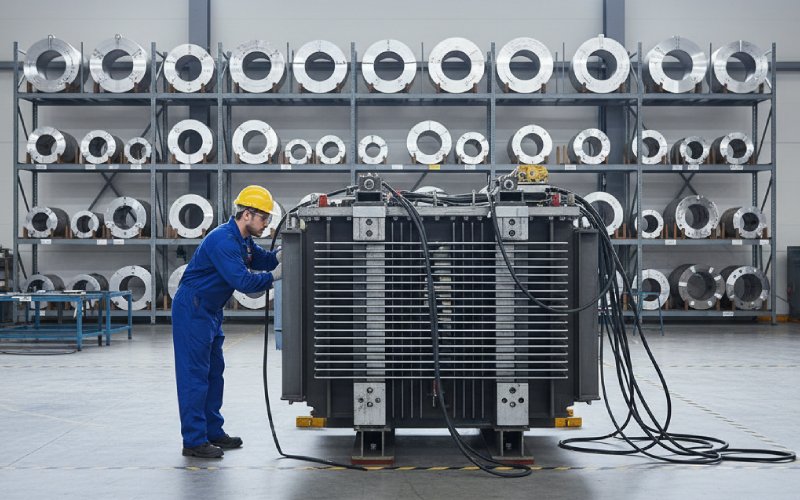
Se state facendo Trasformatori di potenza o di distribuzione MV/HV a frequenza di rete, quasi certamente si tratta di laminazioni CRGO per il nucleo principale:
L'efficienza nella gamma 98-99% è raggiungibile con i moderni gradi Hi-B (≤0,9 W/kg @ 1,7 T, 50 Hz, con incisione laser).
Un fattore di impilamento intorno a 0,96 in una buona costruzione step-lap significa che non si spreca l'area della finestra per l'aria.
Per un'unità da 1 MVA a 50 Hz, il passaggio al nanocristallino per le gambe principali di solito non ha senso:
Dovresti correre Bs inferiore per controllare la perdita a 50 Hz, quindi il volume del nucleo aumenta.
La struttura meccanica diventa complicata: i blocchi avvolti a nastro sottoposti a pesanti carichi di serraggio e trasporto non sono felici, a meno che non si riprogetti tutto intorno a loro.
Quindi per trasformatori di potenza classici, Le pile di laminazione CRGO vincono con un ampio margine di vantaggio su costo per kVA, praticità ed ecosistema.
3.2. Flusso elevato, servizio di cortocircuito, “modalità abuso”.”
Ogni volta che la specifica ha un odore:
corrente di guasto elevata
spunto lungo
vincoli termici in olio o resina
...apprezzerete il fatto di avere ~1.9-2.0 T saturazione invece di ~1,25 T.
Il nanocristallino può gestire un'elevata induzione in casi particolari, ma il punto è semplice: se il nucleo vive vicino al limite durante i guasti, il CRGO è di solito più sicuro.
3.3. Dimensioni del telaio molto grandi e fabbricazione locale
Sui core grandi:
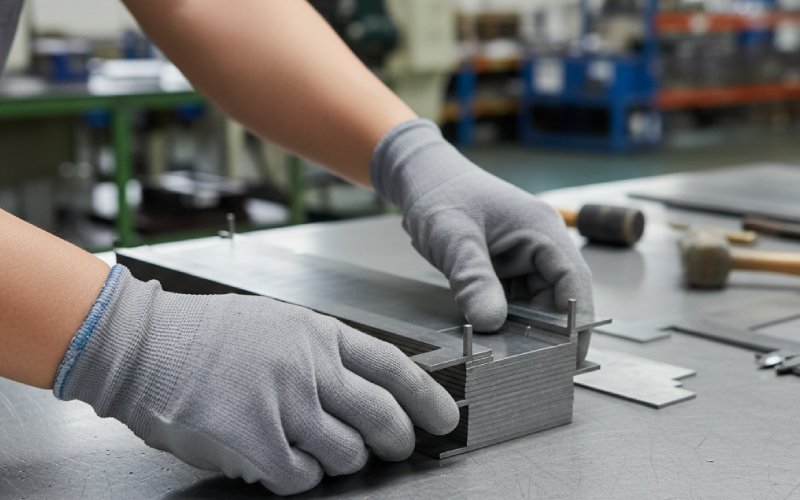
È possibile tagliare, impilare e reimpilare localmente le laminazioni CRGO, utilizzando dime ben conosciute.
Le officine di riparazione sanno come ricostruirli.
Potete rifornirvi di acciaio elettrico da più acciaierie, tagliare localmente e tenere sotto controllo il rischio dei fornitori.
I nuclei nanocristallini di queste dimensioni esistono (pile di nano laminati, non solo toroidi), ma sono prodotti speciali con un numero inferiore di fornitori e finestre di processo più ristrette.
Se il vostro team di acquisto vuole seconda e terza fonte per ogni parte strategica, le pile CRGO semplificano la vita.
4. Dove i nuclei nanocristallini brillano in modo assoluto
Ora la parte interessante. Luoghi in cui il CRGO è tecnicamente possibile, ma non saggio.
4.1. Potenza a media frequenza (da pochi kHz a decine di kHz)
Pensate:
trasformatori a stato solido
Caricabatterie veloci per veicoli elettrici
inverter solari e di accumulo
convertitori di collegamento a media frequenza
In quel gruppo, Esplode la perdita del nucleo CRGO. Nanocristallino rimane calmo:
Dati tipici: a 20 kHz, 0,1 T, i nuclei nanocristallini possono scendere sotto i 15 W/kg contro i >150 W/kg dell'acciaio al silicio CRGO - una differenza di circa 10 volte.
Un'elevata permeabilità (fino a ~80.000 e oltre) significa meno spire, percorsi di rame più brevi e trasformatori compatti a quelle frequenze.
Quindi, se il vostro frequenza di commutazione fondamentale o dominante è nella regione dei 5-50 kHz e la potenza non è minima, il nanocristallino è di solito il favorito, non la ferrite e non il CRGO.
4.2. Induttanze EMI e di modo comune
Le induttanze di modo comune e i filtri EMI sono un territorio classico per i nanocristalli:
µr molto elevato su un'ampia banda → grande induttanza in un piccolo toroide.
Bassa perdita anche in presenza di ondulazioni HF → filtri più freddi a parità di attenuazione.
Con CRGO si può scegliere tra:
bruciare una perdita eccessiva ad alta frequenza, oppure
hanno bisogno di dimensioni assurde per raggiungere la stessa impedenza.
Quindi, se il vostro BoM ha più induttanze CM in ferrite di grandi dimensioni, Il passaggio a nuclei avvolti su nastro nanocristallino è spesso l'upgrade di densità più semplice..
4.3. Trasformatori e misuratori di strumenti
Per trasformatori di corrente (TA) e trasformatori per strumenti di precisione:
L'elevata permeabilità e la bassa coercitività riducono la corrente di magnetizzazione e migliorano la linearità.
La maggiore resistività (~100-120 μΩ-cm contro ~45 μΩ-cm per il CRGO) aiuta a controllare le correnti parassite alle armoniche più alte.
Se il TA vede forme d'onda distorte (azionamenti, caricatori EV, uscite UPS), i nuclei nanocristallini tendono a mantenere l'accuratezza del rapporto e della fase laddove l'acciaio al silicio inizia a vagare.
4.4. Sistemi a 50/60 Hz ricchi di armoniche
A volte la fondamentale è ancora a 50/60 Hz, ma:
Il THD è brutto
i carichi sono elettronici
Il rifasamento e i raddrizzatori immettono nel nucleo componenti ad alta frequenza.
Qui, Il nanocristallino si comporta come “CRGO + ferrite filtrante in un unico materiale”.”. Ottenete:
Buona gestione del flusso a induzioni moderate
forte attenuazione dei componenti HF grazie al profilo di permeabilità e alla perdita inferiore
Questo è uno dei motivi per cui il nanocristallino è presente nei moderni trasformatori a secco e nei reattori speciali destinati all'elettronica di potenza.
5. Bande di frequenza: scheda di progettazione rapida
Non si tratta di regole rigide. Solo un controllo di sanità mentale per una selezione precoce:
0-200 Hz, potenza di massa, MV/HV
Nucleo principale: Laminazioni CRGO quasi sempre.
Nanocristallino solo in piccoli pezzi ausiliari (CT, sensori).
200 Hz-2 kHz
Se l'induzione è bassa e le dimensioni sono generose: CRGO o amorfo possono ancora andare bene.
Se la densità è elevata o si vedono forti ondulazioni: nanocristallino diventa molto attraente.
2-50 kHz
Trasformatori di potenza: nanocristallino vs. ferrite; il CRGO di solito si ritira presto.
EMI: nanocristallino per induttanze compatte ad alta corrente; ferrite per punti più economici e freddi.
>50 kHz
La ferrite domina ancora, con alcuni nuclei avanzati nanocristallini e in polvere per progetti di nicchia ad alta potenza.
Se il vostro progetto si trova esattamente su un confine, aspettatevi iterazioni, non una singola risposta “corretta”.
6. Costo, disponibilità e rischio - dal punto di vista dell'acquirente
6.1. Costo del materiale e della lavorazione
Laminazioni CRGO
Basso costo per kg, alto fattore di impilamento, scarti ragionevolmente bassi con un buon nesting.
Il taglio, la punzonatura a passo e l'impilamento sono tutti processi maturi in tutto il mondo.
Nuclei nanocristallini
Costo per kg più elevato, fattore di impilamento più basso, più fasi di processo (avvolgimento, ricottura, rivestimento, incapsulamento o rivestimento).
Ma spesso si usa meno volume del nucleo perché la µr è più alta e perché la frequenza è più alta.
A livello di pezzi, il nanocristallino può sembrare costoso. A livello livello di sistema, una volta che si è fattorizzato:
rame ridotto
magnetici più piccoli
hardware termico più piccolo
... può essere più economico per kW gestito, soprattutto nei convertitori a media frequenza.
6.2. Tempi di consegna e strategia di seconda fonte
Nastri e laminazioni CRGO:
Molti mulini, molte taglierine.
Alternative più facili da qualificare, anche se i voti sono diversi.
Nanocristallino:
Meno produttori di leghe e fabbriche di anime.
Le ricette di ricottura e i processi di rivestimento variano da fornitore a fornitore.
Se il vostro progetto è critico per la sicurezza o di lunga durata, vale la pena di progettare buste meccaniche e finestre di laminazione che può accettare almeno due geometrie di nucleo nanocristallino, non solo una parte proprietaria.
7. Trappole meccaniche e di produzione da evitare
Non sono presenti nella scheda tecnica, ma hanno un buon rendimento.
7.1. Sovraccarico di nuclei nanocristallini
Il nastro nanocristallino è:
sottile
affilato
un po' fragile
Un serraggio eccessivo o una pressione non uniforme possono:
aumento della perdita
creare punti caldi
anche incrinare il rivestimento del nucleo
Progettate il vostro schema di serraggio per trattare il nucleo della ferita come un componente di precisione, non come una pila di laminazioni pesanti.
7.2. Trattare il CRGO come se avesse un fattore di impilamento infinito
Per le pile di laminazione:
Le bave, la scarsa pulizia e l'allineamento approssimativo del passo-passo possono uccidere silenziosamente il fattore di impilamento e l'efficienza di 0,96 ipotizzati.
Piccoli vuoti d'aria tra i pacchetti si manifestano con perdite a vuoto e rumori più elevati.
Quindi, se state cercando di ottenere un'efficienza frazionaria, Il controllo del processo di lavorazione in officina è importante quanto la qualità del materiale..
7.3. Ignorare il contenuto in frequenza della forma d'onda
A volte i progetti riportano la dicitura “trasformatore a 50 Hz” quando il carico è un quadro elettrico:
Chopper per bus in corrente continua
ondulazione di commutazione
alto contenuto armonico
In questo caso:
L'uso di stack di CRGO puri dimensionati per 50 Hz RMS può provocare un riscaldamento del nucleo spiacevole con forme d'onda reali.
A approccio composito (gambe principali CRGO + nuclei ausiliari o filtri nanocristallini) spesso raggiunge un equilibrio migliore.
8. Percorso decisionale pratico: Laminazione CRGO vs nucleo nanocristallino
È possibile verificare la correttezza della scelta del materiale con alcune domande schiette.
La frequenza operativa principale è ≤ 400 Hz e la potenza è superiore, ad esempio, a decine di kVA?
Sì → Iniziare con Pile di laminazione CRGO.
No → Considerare prima il nanocristallino o la ferrite.
Dovete sopportare elevate correnti di spunto o di cortocircuito ad alto flusso?
Sì → CRGO ha più spazio in Bs.
No → Il Bs più basso del nanocristallino può andar bene; progettatelo in base a questo.
Il nucleo esegue anche il filtraggio EMI / common-mode o vive in una forma d'onda fortemente distorta?
Sì → I nuclei nanocristallini per le bobine e i trasformatori ausiliari sono generalmente migliori.
Il vostro vincolo principale è il volume e il peso, non il costo delle materie prime?
Sì → Il nanocristallino acquista rapidamente valore perché la densità di potenza conta più del prezzo al kg.
Avete una capacità di laminazione locale ma un accesso limitato alle anime speciali?
Sì → Le laminazioni CRGO possono essere più sicure per il calendario fino a quando la catena di fornitura non matura.
Naturalmente è possibile combinare entrambe le cose: Lo stack di laminazione principale CRGO + TA nanocristallini e induttanze CM nello stesso prodotto è già comune nei moderni commutatori e convertitori di potenza.
9. Domande frequenti: Laminazione CRGO vs anima nanocristallina
Q1. Posso inserire nuclei nanocristallini in un trasformatore CRGO esistente e aspettarmi un miglioramento dell'efficienza?
Di solito no. Il nanocristallino vuole un'altra cosa densità di flusso, diverso utilizzo della finestra, e spesso diversi raffreddamento strategia. Gli scambi diretti uno a uno tendono a saturare il nucleo o a sottoutilizzare il materiale. Se si desiderano i vantaggi della nanocristallina, si tratta di un nuovo design magnetico, non di un grado di laminazione sostitutivo.
Q2. Esistono “pile di laminazione nanocristallina” come le pile di CRGO?
Sì, ma non si tratta di componenti di base. I ricercatori e alcuni produttori costruiscono nuclei nanocristallini laminati impilando nastri trattati o piastrelle tagliate a nastro, principalmente per l'elettronica di potenza ad alta frequenza dove i toroidi standard non sono adatti. Per ora, tuttavia, la maggior parte dei componenti nanocristallini in commercio sono: toroidi (solidi o tagliati) Core C forme speciali della ferita Se la vostra attività è quella dei trasformatori di potenza classici, per un po' di tempo vivrete ancora principalmente in pile di laminazione CRGO.
Q3. Come si comportano i nuclei nanocristallini rispetto al metallo amorfo?
Ad alto livello: Entrambi hanno perdita molto più bassa rispetto al CRGO alla frequenza di linea. In molti casi, l'amorfo può ridurre le perdite del nucleo fino a ~70% rispetto all'acciaio al silicio convenzionale. Il nanocristallino spesso migliora rispetto all'amorfo a frequenze più elevate, con una maggiore permeabilità e una minore perdita nella banda delle decine di kHz. Quindi: Per trasformatori di distribuzione ultra-efficienti a 50/60 Hz in grandi volumi: l'amorfo e il GOES avanzato competono. Per i magneti a media frequenza e le EMI: il nanocristallino tende a vincere.
Q4. Il nanocristallino è eccessivo per gli SMPS a bassa potenza?
A volte sì. Per un flyback da 20-50 W a 100 kHz: La ferrite è economica, facile e sufficientemente buona. Il nanocristallino inizia ad avere più senso quando la potenza, la corrente o la polarizzazione CC aumentano o quando le dimensioni sono fortemente limitate. Per SMPS di potenza superiore (classe kW) con obiettivi di efficienza ed EMI esigenti, trasformatori e induttanze nanocristalline può essere una leva forte.
Q5. Cosa devo dire agli acquirenti quando mi chiedono “Perché questo nucleo è così costoso?”.”
Tre brevi punti di solito sono utili: A livello di convertitore, perdita e raffreddamento costano più dell'acciaio. Una minore perdita di nucleo può ridurre i requisiti di raffreddamento di dissipatori, ventole o liquidi. Una maggiore permeabilità significa meno rame, un minor numero di giri e, a volte, un PCB e un assemblaggio più economici. In molti progetti, il volume e il peso dei magneti sono ora vincoli a livello di sistema (spazio nel rack, imballaggio del veicolo), non solo voci nel BoM. Se ancora non funziona, eseguire un'opzione semplice costo per watt risparmiato confronto tra i progetti CRGO e nanocristallini. I numeri tendono a parlare in modo silenzioso ma chiaro.
Conclusione
Le pile di laminazione CRGO non spariranno. Sono imbattibili per i trasformatori di grandi dimensioni e a bassa frequenza e per tutto ciò che vive ad alto flusso in condizioni di guasto.
Anche i nuclei nanocristallini non sono magici. Semplicemente piegano i compromessi a vostro favore una volta:
la frequenza aumenta
il contenuto armonico si fa brutto
oppure si cerca di ottenere magneti compatti ed efficienti nell'elettronica di potenza.
Se si trattano entrambi come strumenti, non come squadre, e li si allinea alla giusta banda di frequenza e al giusto dovere, il vostro pile di laminazione, anime avvolte e decisioni di acquisto inizieranno ad allinearsi molto più facilmente.
Cheney è un ingegnere applicativo senior di Sino, con una forte passione per la produzione di precisione. Ha una formazione in ingegneria meccanica e possiede una vasta esperienza pratica nella produzione. Alla Sino, Cheney si concentra sull'ottimizzazione dei processi di produzione delle pile di laminazione e sull'applicazione di tecniche innovative per ottenere prodotti di alta qualità.
Opuscolo sui nuovi prodotti
Inserite il vostro indirizzo e-mail e vi invieremo l'ultima brochure!
Lasciate che le pile di laminazione di Sino diano forza al vostro progetto!
Per velocizzare il progetto, è possibile etichettare le pile di laminazione con dettagli quali tolleranza, materiale, finitura superficiale, se è necessario o meno un isolamento ossidato, quantitàe altro ancora.


 Italian
  English
  German
  Spanish
  French
  Japanese
  Korean
  Dutch
Dutch  Indonesian