Designing Lamination Stacks for Different Uses
The best choice and design of transformer laminations really depend on the specific use. At Sino, we know that a single solution doesn’t work for everything. We customize our lamination parts to fit the special needs for performance, cost, size, and the environment of different kinds of transformers and industries.
Power and Distribution Transformers
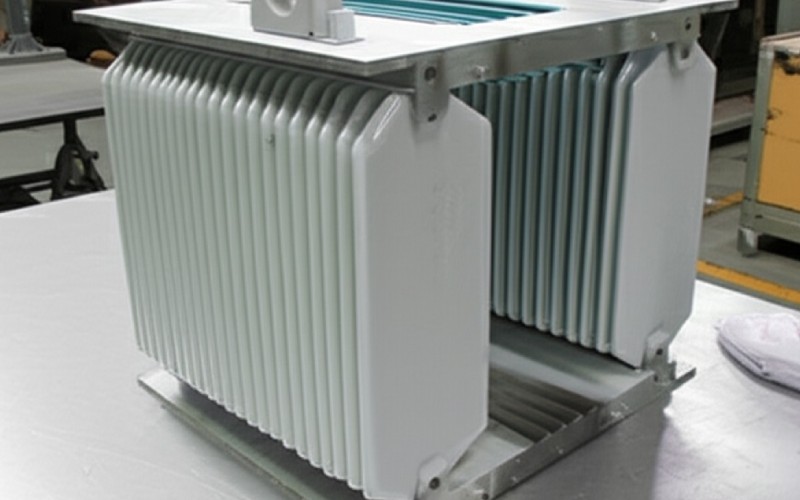
For large power and distribution transformers, efficiency and long-lasting reliability are most important.
- Material Choice: Grain-Oriented Electrical Steel (GOES) is the top material choice because of its very low core losses and high permeability in the rolling direction. We offer top-quality types of GOES (like HiB, Super Core) with thicknesses usually between 0.23 mm and 0.35 mm.
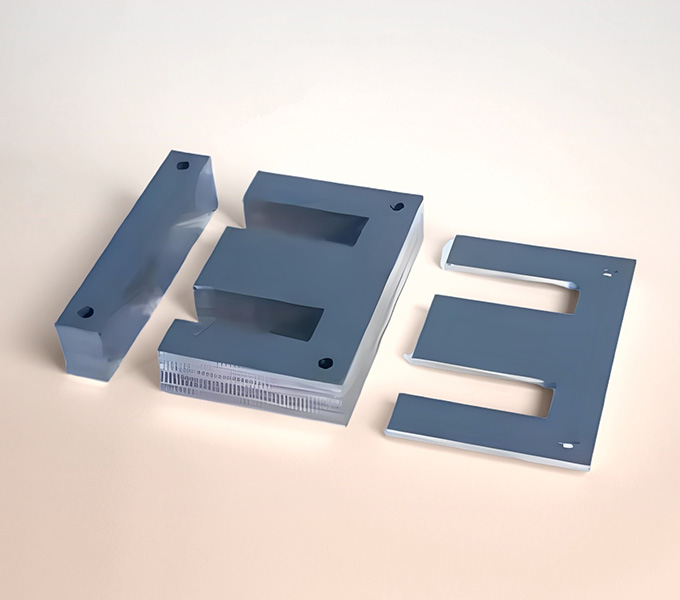
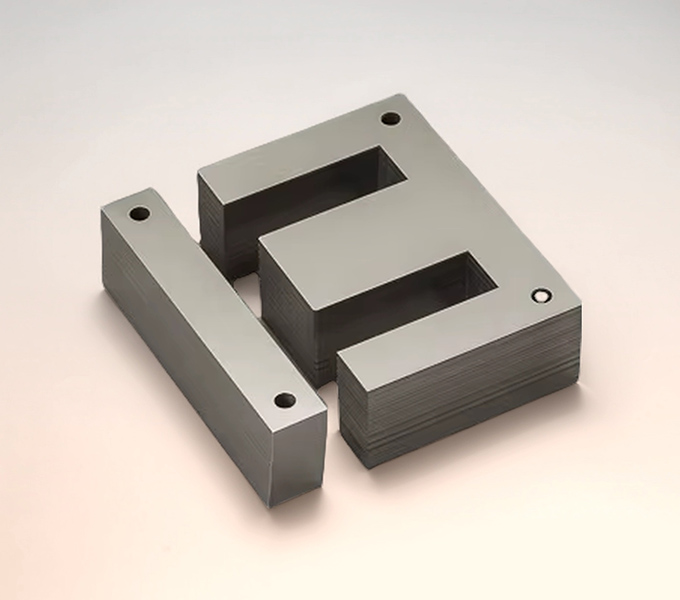
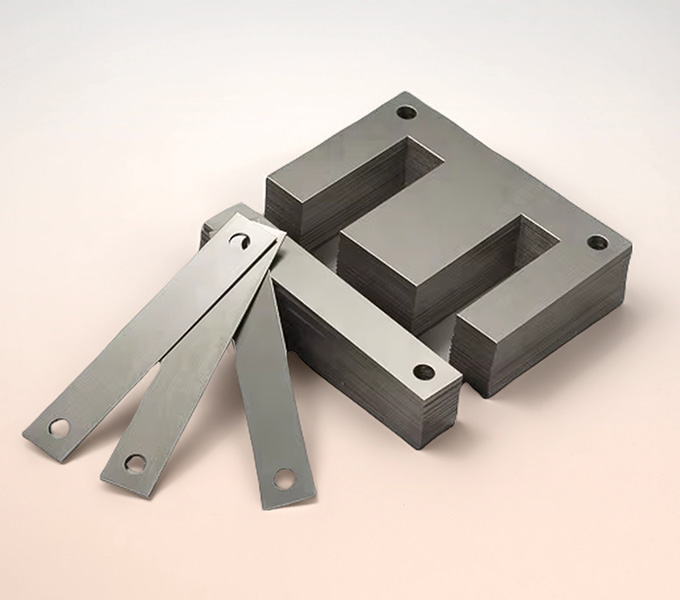
- Core Shape: E-I e U-I laminations are standard. They often use modern step-lap or mitered joint designs to improve how the magnetic field is spread out and to lower noise.
- Efficiency Rules: Because of worldwide Minimum Energy Performance Standards (MEPS) and environmental rules (like the EU Ecodesign Directive e DOE 2027 standards), there’s a growing need for GOES with ultra-low loss.
- Amorphous Metal Cores: For distribution transformers, amorphous metal cores are becoming much more popular, especially in places like China and India. This is because their no-load losses are 60–75% lower than silicon steel. While they cost more at first and have a lower saturation flux density, their better energy saving offers big cost savings over their lifetime and is better for the environment. Sino provides special amorphous core designs that work with the material’s brittleness and lower Bs.
High-Frequency Transformers (e.g., Resonant Converters, SMPS)
Uses like switch-mode power supplies (SMPS), resonant converters, and EV onboard chargers run at very high frequencies, so they need special lamination parts.
- Lamination Thickness: Using very thin laminations is key. We offer thicknesses down to 0.1 mm or even 0.05 mm (50 µm) to greatly lower eddy current losses, which get worse with thicker materials and higher frequencies.
- Material Selection: Regular silicon steel is not the best choice above ~10 kHz. We suggest amorphous alloys (like Metglas 2605SA1) and nanocrystalline materials (like Hitachi Finemet). These have much lower core losses at high frequencies because of their high electrical resistivity and fine internal structure. These materials can lower core losses by 70–80% compared to regular silicon steel at 20–100 kHz.
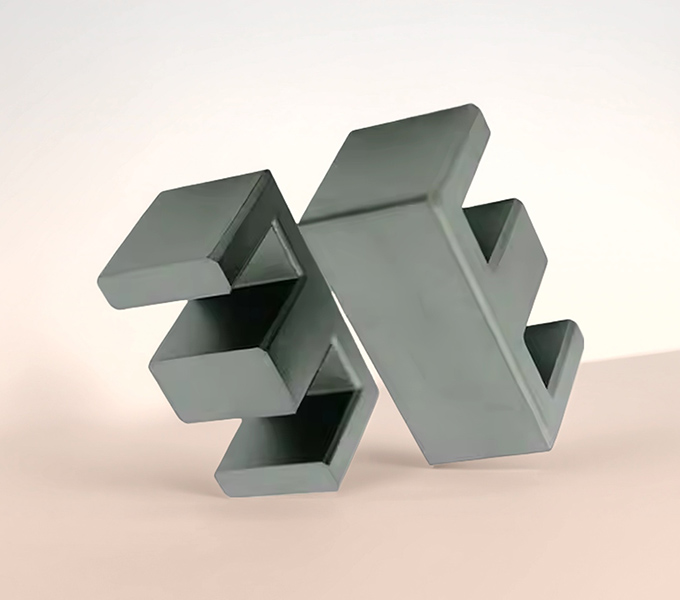
- Core Shape: E-cores e C-cores are often replaced by toroidal e planar shapes to lower leakage inductance and make the magnetic paths better. Planar transformers, especially, let you use very short winding paths, which lowers both AC resistance and parasitic capacitance.
- Hybrid Core Designs: We look into mixed cores, like laminated silicon steel with ferrite gaps or mixed structures (like ferrite + nanocrystalline). This is to mix the high saturation flux density of metallic cores with the low loss of ferrites.
- Heat Management: Our laminations are designed to make it easier to use them with modern cooling methods (like direct liquid cooling or heat pipes) to handle the higher core and copper losses that happen at high frequencies.
Audio Transformers
For high-quality sound systems, the main goal is linearity, low distortion, and a wide range of sound frequencies.
- Material Choice: High-permeability, low-loss nickel-iron alloys (Permalloy) or special high-grade silicon steels are often chosen. These materials have very low hysteresis and great linearity at low magnetic levels.
- Lamination Thickness: Thinner laminations (like 0.14 mm or 0.18 mm) are used to reduce eddy currents across all sound frequencies.
- Ricottura: Careful stress-relief annealing is very important to get the best magnetic properties and reduce magnetostriction, which can cause a humming sound you can hear.
Industrial Machinery and Rotating Machines
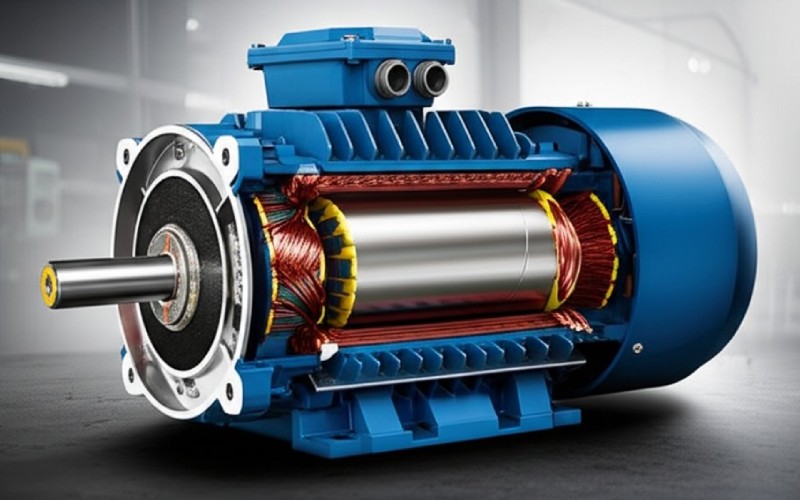
For motors, generators, and other industrial gear, magnetic properties that are the same in all directions are often more important than properties that are strong in just one direction.
- Material Choice: Non-Grain-Oriented Electrical Steel (NGOES) is the standard choice because its properties are the same in all directions and it offers good value. We offer different types of NGOES with the right amount of silicon for different frequency and power needs.
- Thickness: Common thicknesses are between 0.35 mm and 0.65 mm.
Strength: Laminations for rotating machines must handle major mechanical forces and shaking.
Aerospace and Defense
These fields need things to be extremely reliable, very light, and powerful for their size, often in tough conditions.
- Material Choice: Top-quality ultra-thin GOES, amorphous, or nanocrystalline materials are chosen for their better power density and efficiency.
- Saving Weight: Every bit of weight matters, so better core designs and advanced materials are key.
- Temperature Stability: Laminations must keep working well across a wide range of temperatures.
- Vibration Resistance: Strong parts and good building methods are necessary.
Because we deeply understand these different needs, we can work with you to give you not just laminations, but solutions made just for you. This will improve your transformer designs for what they are meant to do, making sure they work their best and give you an edge over competitors.

 Italian
  English
  German
  Spanish
  French