Let Sino's Lamination Stacks Empower Your Project!
To speed up your project, you can label Lamination Stacks with details such as tolerance, material, surface finish, whether or not oxidized insulation is required, quantity, and more.
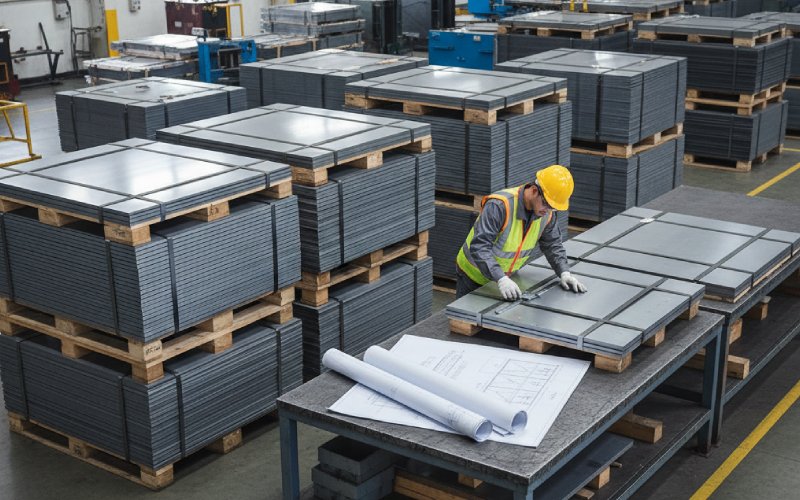
If you already know the theory, this is the part that actually moves money and risk. These answers focus on what to specify, what to question, and what to quietly walk away from when you buy transformer laminations.
If you write RFQs, approve drawings, or get blamed when losses or noise are higher than expected, this is aimed at you. Not the student, not the marketing slide.
You already understand CRGO, core losses, flux density, those pieces. The gap is usually not physics. It is incomplete data on the inquiry, material ambiguity, and suppliers reading between the lines in a way you did not intend.
Suppliers can only be as accurate as your request. A lot of the painful rounds of clarification happen because the buyer sends only a lamination outline or “M4, 0.27 mm, EI” and expects a firm number. Good suppliers quietly expect more: material grade, thickness, core type, dimensions, tolerances, coating, order size, and often an indicative loss target. Many established vendors explicitly say they need at least grade, thickness, width and quality level before they will even frame a proposal.
As a minimum, you should walk in with a clear description of the lamination geometry (EI, UI, mitred, step-lap, toroidal, C-core), chosen CRGO or non-oriented grade, target thickness (typical CRGO coil and lamination thicknesses in power work are around 0.23, 0.27 and 0.30 mm), main dimensions and stack height, coating class, and quantity per release. If you do not specify, a supplier will default to what they have in stock, which may be fine, or may shift your losses and noise out of the budgeted band.
Most power and distribution transformer laminations are still based on grain-oriented silicon steel, because it combines low core loss with high permeability along the rolling direction. Non-oriented silicon steel appears more in rotating machines and some small transformers where isotropic properties are helpful and loss budgets are less strict. Amorphous strip is a different animal altogether: lower loss again, thinner strip, more demanding processing, higher material price, and different core designs.
So for a routine distribution transformer, CRGO remains the default unless you or your customer explicitly require amorphous or some “premium efficiency” badge. If your design team shows you a drawing with non-oriented steel for a high-efficiency power transformer, that is strange. You would want to ask why before you send out the RFQ.
Not always. And not never.
CRGO and related electrical steels are commonly supplied around 0.23, 0.27, 0.30 and sometimes 0.35 mm. Industry notes are consistent on one point: for a given grade, thinner strip generally means lower core loss, because eddy currents are more restricted. That loss reduction, however, is bought with higher material and often higher processing cost.
For high-efficiency distribution transformers, large power transformers, and where regulation forces tight loss guarantees, moving from 0.27 mm to 0.23 mm often makes sense. In small units, or where your load profile is light, the extra steel cost might not come back over the life of the asset. A practical approach is to ask your design team to show two variants: same window and copper, different lamination thickness and grade, with total owning cost or bid price comparison. Several technical papers on lamination thickness selection follow exactly this idea: thickness is a compromise between loss and transformer cost, not a moral choice.
More than most RFQs show.
Grain-oriented steels achieve their best properties after stress-relief annealing, in a given shape. If you then force that material into a different geometry or use laminations that are not flat, you introduce mechanical stress, which degrades the very magnetic properties you paid for. Technical datasheets for CRGO stress that the lamination geometry in the assembled core should match the annealed configuration and that laminations should be kept close to perfectly flat to avoid added stresses and loss.
So when you change from butt-lap to step-lap, from stacked to wound, or from one mitre pattern to another, you are not just changing your steel usage. You are changing how much of the mill’s performance you actually see in the finished transformer. If you are qualifying a new supplier, ask bluntly whether the laminations are delivered after final stress-relief annealing or after cutting from fully annealed coils, and how they control flatness. If the answer is vague, your test lab will eventually notice.
Formal datasheets from electrical-steel processors talk in terms of width deviation, thickness deviation, burr height and waviness. For typical CRGO coils in the 0.23–0.35 mm range, you can find standard tables with thickness tolerances around ±0.02 to ±0.03 mm, width tolerances tied to strip width, and explicit limits on waviness. Cutting houses that specialise in electrical steel also advertise burr heights on the order of 0.02 mm or better for thin materials, which matters because burrs increase local losses and complicate stacking.
In practice, buyers usually lock three things on the drawing: thickness tolerance (aligned with the base steel), edge burr limit, and keyhole/notch position tolerances. Flatness and camber sometimes appear as notes rather than hard numbers, but they still matter for stacking factor and assembly time. If a supplier refuses to state any burr or flatness limit, you are effectively accepting whatever their tooling happens to deliver that month. That is a quiet risk, but still a risk.
Core loss values live on three parameters: flux density, frequency, and the test method. CRGO datasheets and independent references insist that loss comparison is only valid at the same induction and frequency and under a known standard, usually Epstein frame or a specified single-sheet test.
Practically, this means you should always ask suppliers to state loss at your design point, or at least at a common reference, such as 1.5 T or 1.7 T at 50 Hz or 60 Hz, along with the test method. If one vendor quotes W/kg at 1.5 T and another at 1.3 T, the lower number does not automatically mean better steel. It might only mean a softer test condition. A short clause in your RFQ that fixes test conditions often removes a surprising amount of confusion later.
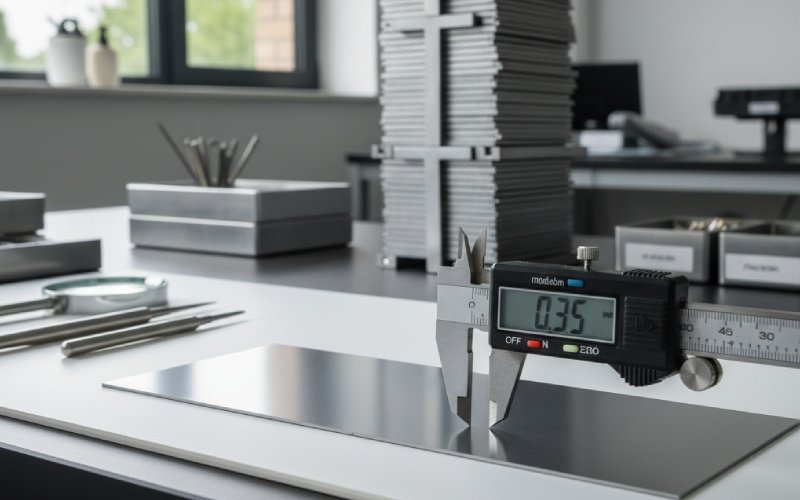
Secondary material can be attractive on price, especially when markets are tight. Established distributors describe prime CRGO as virgin material from the mill with guaranteed properties, while secondary covers leftovers, slit or oily sheets, and dismantled cores that still have usable performance but looser traceability.
If you mix prime and secondary laminations inside the same core, you inherit their variability. That may be acceptable for low-cost, low-risk applications, repairs or experimental units. It is harder to accept for new series where you have loss guarantees or strict noise targets in your contract. A more controlled approach is to reserve secondary laminations for separate designs with explicitly derated expectations, and keep prime material for anything where penalties or branding are at stake.
Grain-oriented electrical steels are typically supplied with a thin inorganic coating over a glassy base layer formed during annealing. Public datasheets from major producers show coating thicknesses on the order of 2–5 micrometres, chosen to provide adequate interlaminar resistance and good stacking factor.
For you as buyer, the important part is not the chemistry name. It is that the coating is compatible with your processing: punching after coating, laser scribing, clamping method, oil compatibility, temperature limits. If you plan to weld, bond, or use adhesive between laminations, tell the supplier early; some coatings are not intended for such use and may crack or outgas in ways that hurt your process.
Aggregators that compare transformer-related suppliers commonly look at several reliability indicators: on-time delivery rate, response time, reorder rate, and years in operation, and highlight manufacturers with on-time rates around or above 95% and at least five years of activity as more dependable partners.
For laminations, on-time delivery is not a soft metric. A late core can stop a production line. Response time tells you how they handle engineering clarifications. Reorder rate is a rough proxy for whether other buyers liked what they received. Combine those signals with technical capabilities such as thickness range, burr control, and access to specific grades, and the lowest headline price often stops being the obvious choice.
Basic FAQs from established transformer-materials suppliers often state minimum order quantities around a few hundred kilograms for standard products, with higher trial MOQs for custom items, and production times of a few weeks for new orders. Marketplace listings for CRGO coils and laminations show MOQs ranging from a single tonne to tens of tonnes, with quoted delivery times typically in the range of one to three weeks ex-works once material is available.
Packaging for laminations is usually some combination of strapped bundles in wooden cases or pallets, with paper between layers, eye-to-wall or eye-to-sky for coils, and rust protection suitable for sea transport if needed. When in doubt, ask for photos of standard packing from previous shipments. Those pictures tell you more about their real process than any sentence in a brochure.
The details always depend on your design and standards, but many projects quietly fall into a few patterns. This table is not a substitute for design work. It is just a fast mental check while you read a quote.
| Typical application scenario | Usual lamination choices buyers expect | Fast rule-of-thumb check |
|---|---|---|
| Small distribution transformer, cost-sensitive, modest loss guarantee | CRGO grade in the M4–M6 family or equivalent, thickness around 0.27–0.30 mm, stacked EI or simple step-lap core | If the quote uses thicker than 0.30 mm or unlabelled steel with no grade and loss data, question it. Lower price may be hiding higher lifetime loss. |
| High-efficiency distribution transformer with strict energy-efficiency label | Higher grade CRGO, often 0.23 mm, mitred or step-lap joints, carefully controlled burr and coating | Expect to see explicit loss figures at your design induction, and mention of specific high-grade steels. If not, the “high-efficiency” claim is only words. |
| Large power transformer or critical industrial supply | Premium CRGO or domain-refined grades, thickness 0.23–0.27 mm, complex step-lap designs, documented annealing and QA | If the supplier cannot show mill certificates and core loss test reports for the actual batch, treat the offer as incomplete, no matter the unit price. |
| Repair, retrofit, or very low-budget project | Mix of secondary CRGO laminations, possible re-use of dismantled cores, relaxed cosmetic requirements | Accept higher scatter in performance and document it. Do not quietly apply the same loss guarantees as for new prime-steel designs. |

Core manufacturers who talk openly about quality assurance usually refer to three main items: incoming material certification from the mill or service centre, in-house testing of core loss and related magnetic properties, and dimensional checks on laminations or assembled cores. If your supplier is just forwarding mill certificates without any internal verification, you are relying entirely on the upstream supplier’s process control.
A practical minimum is a test report per batch that states steel grade, thickness, coating type, measured loss and flux density at a defined induction and frequency, and a summary of dimensional checks. For large contracts, some buyers also witness tests or send periodic third-party samples for verification, especially when moving to new grades or new cutting lines. The point is not to be suspicious of everyone. The point is to have a traceable chain of evidence when a field unit runs hot or noisy.
Treat it like you would treat a new winding-wire supplier or bushing vendor, just with different test equipment. Start with a technical questionnaire that covers grades, thickness range, cutting methods, annealing capability, burr control and QA steps. Compare their answers against what you know the major electrical-steel mills recommend for processing.
Then request a small sample batch cut to your drawings, preferably for a known transformer design you already manufacture. Build a few cores, measure no-load loss, excitation current and noise against your current baseline. Any large deviation deserves investigation before you scale up. Quality-focused core manufacturers stress routine process control and standardisation for good reason: subtle changes in cutting or handling can shift losses even when the steel grade nominally stays the same.
Once you are confident, you can gradually increase volumes, still keeping an eye on trend data. It is easier to renegotiate or adjust process details when both sides have only a small amount of shared history.
If you have a well-equipped lab, that is a strong position. But relying only on in-house testing can create blind spots in scheduling and responsibility. Modern QA practice for transformer cores usually uses both: supplier testing for every batch, plus buyer testing for incoming inspection or periodic audits.
Supplier testing catches process drift quickly, before material even leaves their plant. Your own testing verifies that what arrives still matches your expectations after transport and storage. When both sets of data agree, everyone relaxes a little. When they diverge, you have two independent references to help track down where the problem occurred.
A good internal spec is short but specific. It should freeze the material family and grade or an equivalent band of grades, lamination thickness, minimum acceptable strip and lamination tolerances, coating type, lamination geometry, acceptable test conditions for core loss, and any special processing notes such as laser scribing, gapping, or maximum stacking pressure. References to known standards or mill datasheets for the grades involved help avoid arguments over naming conventions, which can differ between suppliers.
Once that spec exists, every RFQ becomes clearer: purchasing just attaches it to the inquiry and adjusts only commercial terms and quantities. Suppliers can quote faster, and your engineering team spends less time re-answering the same basic questions for each new project. Not perfect, but better.
Buying transformer laminations is not just a question of “Which CRGO grade and how thick?”. It is a mesh of geometry, material, tolerances, coating, QA, supplier reliability and how clearly you translate a design into a drawing and an RFQ.
If you tighten only one thing after reading this, make it the information you send out with your next quote request. State the grade band, thickness, test conditions for loss, basic tolerances and your expectations on documentation. Everything else becomes a more straightforward negotiation.




 English
  German
  Spanish
  French
  Italian
  Japanese
  Korean
  Dutch
Dutch  Indonesian