Let Sino's Lamination Stacks Empower Your Project!
To speed up your project, you can label Lamination Stacks with details such as tolerance, material, surface finish, whether or not oxidized insulation is required, quantity, and more.
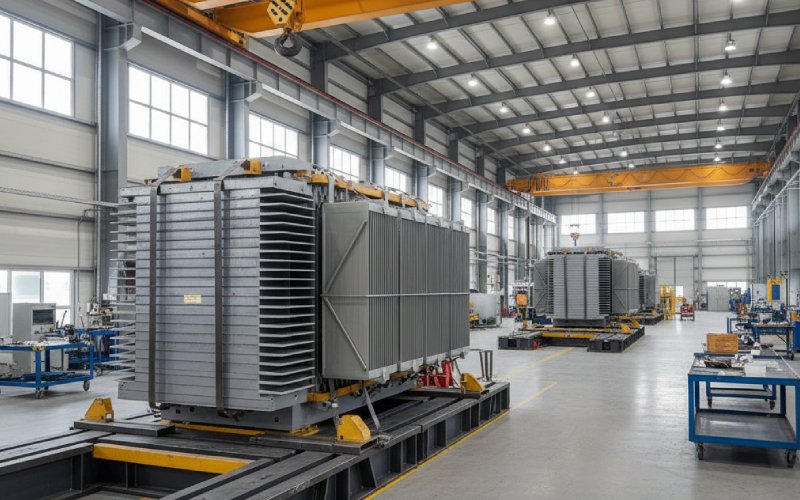
Hi-B CRGO is just grain-oriented steel that wastes less energy. You pay a premium on the core material, and you buy back that money through lower no-load losses, smaller cores, or stricter efficiency labels. In some transformers the payback is obvious and fast. In others, the extra grade is mostly a feel-good line on the datasheet.
You already know what CRGO is, so it’s easier to think of Hi-B as a set of small engineering tweaks stacked together: higher permeability grades, tighter texture control, thinner gauges, domain refinement. Together they push the loss curve down and let you hold flux density a bit higher without paying the usual penalty.
Modern Hi-B grades routinely hit specific core losses of ≤0.9 W/kg at 1.7 T, 50 Hz, especially when laser-scribed. Conventional CRGO in utility service tends to sit more in the 1.0–1.6 W/kg band, depending on thickness and grade.
Producers also refine domains with surface treatments; that alone can trim losses another 10–15% around 1.7 T in the lab. In assembled cores you never see the pure sheet number. Building factor, mitred joints, and handling damage stack on top. Nippon Steel’s ORIENTCORE Hi-B data, for example, show that 45° joints keep the building factor close between Hi-B and conventional CRGO, but 90° joints exaggerate the advantage of Hi-B because its rolling-direction properties are stronger.
So the short version: Hi-B is still CRGO, just tuned so that every small inefficiency in the magnetization process is shaved a bit thinner. That matters only if you let those shaved watts accumulate.
Prices move, but the pattern is stable. For a given thickness and supply situation, Hi-B CRGO usually sits maybe 10–25% above standard CRGO per ton, sometimes more for very tight-loss batches. Public listings for grain-oriented steel show a spread where standard coils cluster lower, with “Hi-B” or “HGO” options consistently priced up.
Compare that to amorphous. A few years ago, outside the US, amorphous ribbon was quoted around 0.95 USD/lb while Hi-B GO steel sat roughly at 0.86 USD/lb: higher than basic CRGO, lower or similar to amorphous. Local realities will disturb those numbers, but the hierarchy tends to hold: CRNO at the bottom, conventional CRGO, then Hi-B, then amorphous and more exotic alloys.
The important part is that you are not buying a different physics. You are buying a different ratio between capital expenditure and kilowatt-hours lost as heat. That ratio is the only reason this discussion matters.
If you strip away all the marketing words, the question reduces to a plain fraction.
Extra money in the core, divided by annual energy saved. If the result is shorter than your acceptable payback time (or shorter than the transformer’s expected regulated life), then Hi-B is doing work for you.
The annual saving is driven mainly by the reduction in no-load loss. For a transformer energized 24/7, it is roughly:
Annual saving ≈ ΔP₀ × 8760 h × effective energy price
ΔP₀ is the reduction in core loss in kW, not W/kg. The “effective energy price” is rarely just the tariff; it mixes real tariff, loss capitalization in your utility’s planning rules, and any penalty or reward from efficiency regulations.
Real projects show how far this can go. In one reported high-load substation in Busan, switching to “super Hi-B” core transformers cut no-load losses about 22%, with an estimated 480,000 USD per year saved and payback in under three years. That is an aggressive case, but it shows the direction: if energy costs are high, and the transformer is big and always energized, the economics move quickly.
For a smaller distribution transformer in a moderate-tariff market, the same math gives you a calmer answer. Maybe the extra Hi-B core costs you 2–5% more on the transformer, and the reduced core loss gives you a payback time somewhere between 4 and 10 years. Sometimes fine, sometimes not, depending on how your finance team thinks about net present value and on how strictly regulators price losses.
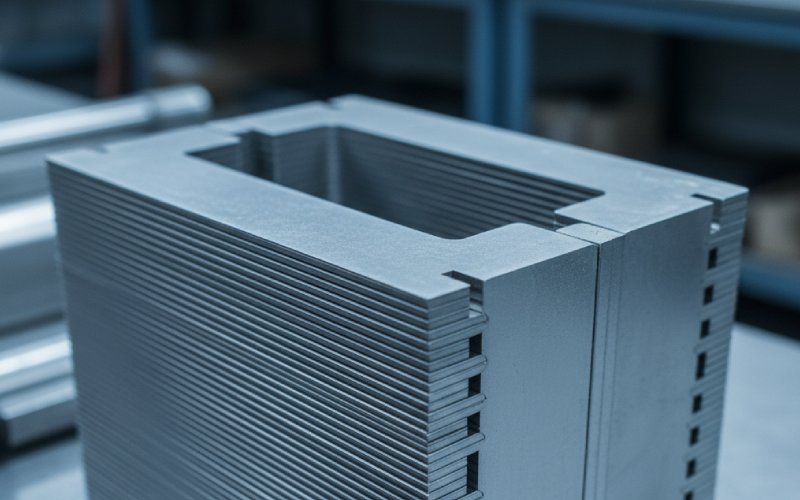
Think about operating profile first, then standards, then geometry. Not the other way round.
Hi-B tends to justify itself when the transformer sits energized almost constantly and spends a lot of its life at moderate load. In that regime, no-load loss is a big slice of lifetime energy waste, and trimming it is usually cheaper with steel than with copper. Distribution and power transformers feeding dense urban or industrial networks fall into this pattern. National and regional codes that set maximum loss values for each kVA class (EU Ecodesign, DOE, BIS, and similar) quietly push specifiers toward higher-grade CRGO or Hi-B to stay inside allowed limits without exploding copper size.
Another situation: when footprint is tight. Hi-B’s higher permeability and lower loss at the same flux density give you room to push Bmax a bit higher, or to shave core cross-section area while meeting loss targets. That lets you design a smaller tank and sometimes a more compact substation bay. Catalogs from several steel and core suppliers show Hi-B grades with loss ratings down to roughly 0.70–0.85 W/kg at 1.7 T in thin gauges, which support this higher-flux design approach.
Finally, if your organization explicitly capitalizes losses in tender evaluations, Hi-B is almost trivial to justify. Once no-load loss is multiplied by a regulated dollar-per-watt figure, a 15–25% reduction in that loss from Hi-B laminations easily overtakes a 10–20% jump in steel cost, especially on medium and large units.
There are also cases where Hi-B is honestly more polish than tool.
If a transformer has relatively low energized hours per year, or spends most of its life near its rated load, then copper loss dominates the energy story. In rural feeders with long outages or seasonal operation, or in industrial plants with intermittent backup transformers, the incremental saving from better core material can be small compared with the uncertainties in actual usage.
Conventional CRGO already offers core losses in the 1–2 W/kg range at 1.7 T, 50 Hz. For many standard grades that is already more than good enough to meet current requirements, especially at lower kVA ratings. If your tender is decided mostly on upfront price and uses very soft loss capitalization, Hi-B can end up as a quiet cost adder with unclear benefit.
There is also a mechanical side. Hi-B grades often come in thinner gauges and can be more sensitive to edge burrs, scratches, or careless stacking. Each defect chips away at the laboratory loss advantage. If your lamination punching, annealing, and stacking processes are marginal, you can pay for the premium grade and then give half of it back during fabrication. Papers on “handle with care” CRGO processing make this point bluntly: mishandling CRGO moves real core loss far away from the guaranteed sheet figure.
In that kind of shop, sometimes the most practical upgrade is not the material, but the process.
Hi-B sits in the middle ground between conventional CRGO and amorphous or nanocrystalline alloys. Amorphous cores can cut no-load loss down to roughly a third of conventional CRGO values, though often specified at lower flux densities such as 1.3 T; specific losses below about 0.3–0.6 W/kg are common in data sheets. But amorphous ribbon is thin, brittle and demands different cutting and winding processes, which is why many utilities reserve it mainly for distribution transformers.
To put the options side by side, not as a strict database but as a practical snapshot, you can think roughly like this:
| Core material type | Typical specific loss at 1.7 T / 50 Hz (sheet value, W/kg) | Relative material cost vs conventional CRGO | Processing notes | Typical sweet spot |
|---|---|---|---|---|
| Conventional CRGO (M3–M5) | About 1.0–1.6, depending on grade and thickness | Baseline | Well-understood punching, stacking, annealing; tolerant of normal workshop practice | General power and distribution transformers where current standards can be met without aggressive loss targets |
| Hi-B CRGO | About 0.7–1.0; many commercial Hi-B sheets guaranteed at ≤0.9 W/kg | Typically 10–25% higher per ton | Often thinner gauges (around 0.23–0.27 mm); more sensitive to handling and joint design; benefits strongly from mitred cores | Medium and large transformers, long energized hours, explicit loss capitalization, or limited footprint |
| Super Hi-B / domain-refined premium grades | Around 0.7 W/kg and below in best catalog entries | Above Hi-B; niche use where loss costs are high | Strong dependence on processing, laser scribing, and building factor; needs tight quality control | High-value substations, dense urban networks, pilots like the Busan project that chase aggressive NLL cuts |
| Amorphous alloy | Often <0.3–0.6 W/kg at lower flux like 1.3 T; still well below CRGO at comparable flux | Similar to or somewhat higher than Hi-B, depending on region and volume | Ribbon form, very thin; cutting and stacking need specific tooling; more brittle; different core geometries | Distribution transformers with very high energized hours and tight efficiency rules |
The exact numbers here shift with grade and manufacturer, but the relative pattern is steady: each step right cuts sheet loss and adds material and process cost.
Hi-B’s role is clear in this grid. It is the “do more with the same design philosophy” option: you can still build cores with familiar methods, still stack laminations in the usual way, still buy from existing CRGO supply chains, but you get a lower baseline loss.
You do not have to think in all-or-nothing terms. One interesting result from research on wound cores is that using a mix of conventional CRGO and high-magnetization grades can reduce both cost and loss together. The inner and outer sections of the core take the higher-grade material, while the rest uses standard CRGO. Typical reports show mixed-core transformers with slightly better losses than all-conventional cores, but with less material cost than full Hi-B designs.
In practice, similar ideas show up as: Hi-B on main legs, conventional CRGO on yokes; Hi-B for certain kVA ratings only; or Hi-B reserved for specific markets where losses are monetized harder. The point is that lamination choice is not a binary choice at company level. You can tune it per design family.
When you have an actual RFQ or an internal design review in front of you, running a basic check is usually enough to decide whether to move from conventional CRGO to Hi-B. A simple, slightly blunt approach is still useful:
First, estimate the reduction in no-load loss from Hi-B at your design flux. If your current catalog grade gives around 1.3 W/kg at 1.7 T and you can move to a Hi-B grade around 0.9 W/kg, that is roughly a 30% improvement in sheet terms. After building factor and real geometry, you might end up closer to 15–25% at core level.
Second, convert that into kilowatt-hours per year using your expected duty cycle. A transformer energized all year will run 8760 hours; you already have a good sense of whether your transformers are ever actually de-energized.
Third, apply whatever internal or regulatory value you put on losses. If your utility capitalizes losses at, say, 5–10 times the tariff, that multiplier quickly swamps modest changes in steel cost. If your industrial user pays pure spot tariff with no loss capitalization and may replace the plant in seven years, the calculation becomes tighter.
Fourth, compare to the quoted premium for Hi-B laminations or cores. If the extra capex divided by annual saving is shorter than your organization’s payback horizon, then Hi-B has done its job on paper. If it is longer, but you still need Hi-B to hit an efficiency class, then you are not really making an economic choice; you are just complying with rules.
Of course this ignores second-order effects: reduced oil temperature rise, slightly lower noise, or possible size reductions. But as a quick filter, it keeps the discussion grounded in numbers rather than taste.
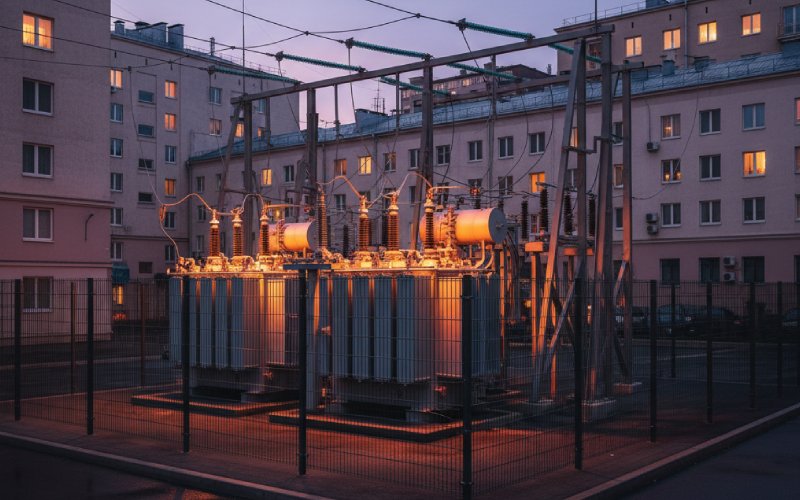
A few details quietly decide whether Hi-B performs like Hi-B or like a very expensive conventional grade.
Joint design matters. When magnetization deviates from the rolling direction, loss increases sharply; data from major producers show loss at 90° can be more than three times the rolling-direction value. Poorly designed or misaligned joints can therefore eat much of the gain you expected from Hi-B.
Handling and punching matter too. Burrs, scratches and residual stress from punching add localized fields and increase hysteresis and eddy losses. That is true for all CRGO, but the thinner and more refined the steel, the more easily you damage the surface and the more sensitive the material becomes. Process controls that were “good enough” for older CRGO grades may not be good enough for modern Hi-B.
And standards evolve. National norms like IS 3024 separate conventional and high-permeability grain-oriented steels, with different maximum specific loss tables at 1.7 T, 50 Hz. As regulators tighten allowable losses, designers who waited on Hi-B often find themselves forced there anyway on the next revision.
If you strip back the details, the pattern is not complicated. Hi-B lamination is usually worth it when:
You can genuinely monetize no-load loss over the transformer’s life.
You run high energized hours at modest loads, especially in larger kVA ratings.
You either need, or are moving toward, stricter efficiency classes that are hard to reach with conventional CRGO alone.
Your manufacturing process is good enough not to throw away the advantage through bad joints or rough handling.
Outside those conditions, Hi-B can still be useful, but the argument weakens. It becomes less of an economic choice and more of a branding or compliance choice.
And that is the quiet truth in the background of all the glossy brochures: Hi-B CRGO is not magic. It is a sharper version of a familiar tool. When you match it carefully to load profile, regulatory pressure, and manufacturing discipline, it pays for itself and stays invisible for decades. When you drop it into the wrong context, it simply makes a good transformer slightly more expensive.





 English
  German
  Spanish
  French
  Italian
  Japanese
  Korean
  Dutch
Dutch  Indonesian