Let Sino's Lamination Stacks Empower Your Project!
To speed up your project, you can label Lamination Stacks with details such as tolerance, material, surface finish, whether or not oxidized insulation is required, quantity, and more.
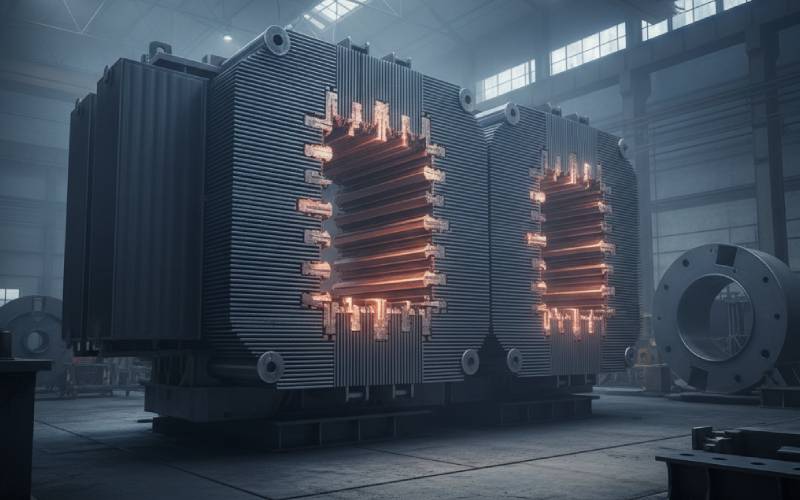
When a transformer or generator runs, the first place many experienced engineers look for trouble is the core joints. Those sneaky lamination joints — T-joints, mitred corners, step-laps — are where flux changes direction, gaps are hardest to control, and where local “mystery” hot spots love to appear on thermography.
In this article we’ll walk through why those hot spots happen, how to tell the “harmless warm patch” from a genuine core fault, and what design, manufacturing and O&M practices actually prevent them — not just on paper, but in the field.
At a lamination joint, the magnetic flux is being forced to turn a corner and jump from one stack of steel to another. In three-phase transformer T-joints, several limb fluxes even add up in one shared region, which pushes local flux density above the average in the core.
Research on distribution transformer cores shows that localized losses at certain T-joint regions can be significantly higher than the average core loss, especially near inner edges of butt joints where flux crowding and unfavorable flux angles occur. That extra loss turns directly into heat — so your IR camera “sees” a hot spot even when nameplate load is fine.
Before we blame manufacturing or maintenance, it helps to visualize what the physics is doing at a joint. In a perfect laminated core:
Reality is messier. At a T-joint or mitred corner:
So even if nameplate losses look fine, joints are where physics makes the margin thinnest — which is why that’s where defects show up first as hot spots.

Let’s connect the physics to things you actually see during manufacturing, testing, or operation.
Below is a compact “field map” of the most common root causes behind localized hot spots near lamination joints, and how they tend to show up.
| Root cause category | Mechanism at lamination joint | Field clues you see | Typical fix / prevention |
|---|---|---|---|
| Flux crowding & joint design | Poor T-joint / corner design, insufficient overlap, or step-lap geometry causing local B peaks and unfavorable flux angles | Repeatable hot spot at the same joint on multiple units of the same design; temperature scales strongly with voltage (V/Hz) | Re-optimize joint geometry (step-lap, mitre angle, overlap length), reduce operating flux density, improve FEM modeling of core joints |
| Lamination shorts / damaged coating | Burrs, scratches, warped plates or missing coating create inter-lamination conductive paths; region behaves like a thicker solid plate | Localized hot spot that may grow over time; EL CID / core test shows localized high signal; sometimes metallic sheen or discoloration inside core | Tight burr control, deburring, controlled punching; maintain coating integrity; core-back grinding and inspection; reject or rework damaged stacks |
| Misaligned or gapped joints | Poor stacking, uneven step-laps, extra air gap along butt-joint; flux forced into narrow “bridges” with higher B and normal flux component | Hot band along a joint rather than a single point; no major change in global core loss but abnormal local temperature | Better stack fixtures & automation, consistent bolt torque, magnetic gap fillers, improved dimensional tolerances on laminations |
| Multi-point core grounding | Circulating currents in core due to more than one ground point; currents concentrate near joints & structural contacts | Elevated core grounding current (>100 mA), DGA thermal gases, hot streaks near core clamps or lead exits | Enforce strict single-point core grounding, inspect and remove unintended grounds, consider temporary series resistor while planning outage |
| Stray flux in structural parts | Leakage flux at joints and ends inducing eddy currents in clamps, tie plates, tank wall, etc. | Hot spot not exactly on core but on clamp/tank near joint; tends to worsen at higher load / current | Add magnetic shunts, copper shields, or flux diverters; relocate or redesign metallic pieces near high-flux areas |
| Cooling & oil/air flow issues | Blocked ducts, stagnant oil pockets near top yoke or limbs; a slightly higher-loss joint region overheats because it can’t shed heat | Temperature rise much higher than expected for a modest increase in loss; IR shows broader warmer zones | Clean and verify cooling ducts, maintain oil quality and level, ensure forced cooling equipment works as intended |
| Harmonics, over-excitation, DC bias | Non-sinusoidal flux and elevated V/Hz push joints closer to saturation; iron loss spikes at high-B regions first | Hot spots appear during abnormal grid conditions, harmonic injection, or overfluxing events; trend correlates with V/Hz and THD | Enforce V/Hz limits, install over-excitation protection, reduce harmonic injection (filters, STATCOM tuning) |
| Foreign objects & contamination | Loose metal particles or tools bridging laminations or laminations to grounded structure, often trapped near joints or ducts | Very localized intense spot, sometimes intermittent; may move slightly, or appear after transport or overhaul | Strict cleanliness, tool & material control, internal inspection during major outages, oil filtration and flushing where appropriate |
Some hot spots are not mistakes; they’re baked into the design margins. If you’re designing or specifying cores, you’re playing with these levers every day — sometimes without seeing the thermal consequences until later.
Well-documented studies on three-phase transformer cores show that T-joint regions are the most complex, loss-influential parts of the core: flux turns sharply, multiple limb fluxes superimpose, and both in-plane and normal flux components become large. Optimized joint designs (e.g., improved step-lap or mixed 60°/45° joints) measurably reduce localized loss compared with older 45°/90° arrangements.
Similarly, high-grade CRGO with proper coating and stress-relief annealing dramatically reduces both global and local core loss for a given B, which gives you more margin before joints run hot in service.
Even a beautifully modeled core can misbehave thermally if manufacturing and assembly don’t treat lamination joints with respect.
Punching and stacking operations can leave burrs, warped plates, or misaligned step-laps. Industry experience and technical literature both note that scratches, large burrs, or warped laminations in the core stack can locally short laminations and cause local overheating, even when total core loss remains within spec.
On large machines (generators, big motors), lamination damage from vibration or loose cores can also wear away interlaminar insulation; worn insulation leads to shorts, core hot spots, and in extreme cases, melted cavities in the core if left unchecked.
You can inherit a perfectly built core and still get localized hot spots if the operating environment pushes it outside its comfort zone.
Over-excitation (high V/Hz), heavy harmonic content, or DC bias pushes flux density up, and the first places to complain are the joints and corners where B is already higher. Technical guidance on transformer cores highlights overload, increased iron loss from off-design operating points, and harmonics as important drivers of core overheating.
Stray flux is another culprit: leakage flux that escapes the main core — especially near winding ends and joints — can induce eddy currents in clamps, tank walls, and other metal parts, creating local hot spots that show up near joints even if the laminations themselves are okay.
Finally, multi-point core grounding is a classic “invisible” problem: two or more core grounds form a loop, circulating current in the core steel and structural path. That circulating current generates localized overheating detectable via infrared, grounding current measurements, and DGA gas signatures.
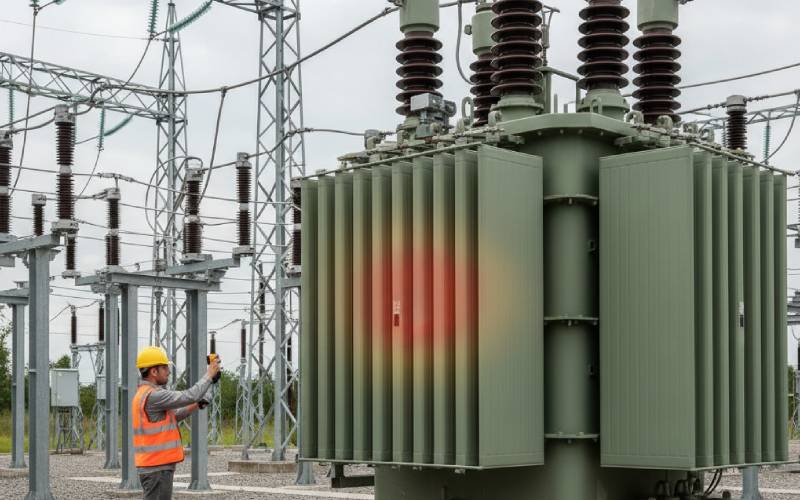
Once you’ve spotted a hot spot on an IR camera or from a thermal sensor, the real question is: is this an acceptable warm region, an early warning, or a genuine core fault in the making?
The best answers combine thermal observations with electrical and chemical tests. Modern research and field practice emphasize localized loss measurement, advanced thermography, and core fault detection techniques (like EL CID for generators or core loop tests for transformers) to pinpoint inter-lamination problems early.
Most localized hot spots at lamination joints are preventable with a mix of good design discipline, serious manufacturing QA, and realistic operational controls.
Think of prevention in three layers: (1) Design it right, (2) Build it clean, (3) Operate it kindly.
Localized hot spots near lamination joints are not random bad luck. They’re almost always the visible tip of one or more underlying issues:
When you combine thermal patterns with design knowledge and a few targeted tests, “that odd warm patch on the top yoke” turns into a clear story: misaligned step-lap, or lamination short, or multi-point ground, or stray flux in a clamp. And once you have that story, the path to mitigation — redesign, re-stack, re-ground, re-cool — becomes much clearer.



 English
  German
  Spanish
  French
  Italian
  Japanese
  Korean
  Dutch
Dutch  Indonesian