Let Sino's Lamination Stacks Empower Your Project!
To speed up your project, you can label Lamination Stacks with details such as tolerance, material, surface finish, whether or not oxidized insulation is required, quantity, and more.
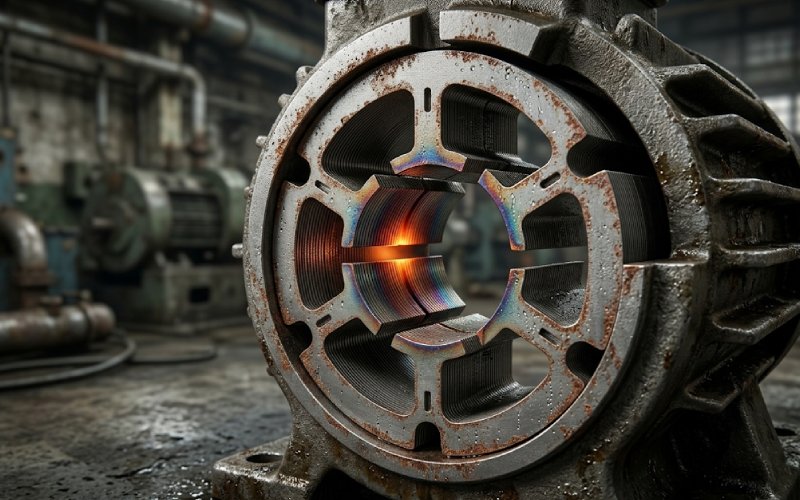
Pump motor lamination stacks live in a rough pattern: heat up, cool down, pull in damp air, start hard, shake, repeat. So the failure is rarely neat. Not “corrosion problem.” Not “overload problem.” Usually a stack problem made from several smaller things that were allowed to overlap.
Corrosion on a lamination stack is not important because the steel looks ugly. It matters when the corrosion path, contamination, or damaged coating lets adjacent sheets stop behaving like isolated sheets. Once that electrical separation drops, local circulating currents rise, losses rise with them, and the stack starts making heat where it should not. Small area. Big consequence.
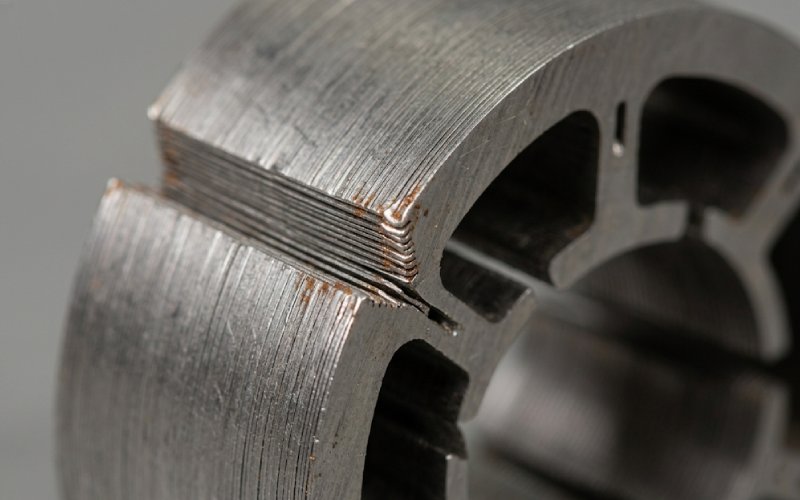
The weak point is often the cut edge, punched features, and places where the coating took abuse during manufacturing, handling, rewinding, or teardown. That is where burrs bridge layers. That is where conductive residue stays. Broad surface rust can look worse than it is. Edge damage can look minor and be the real problem.
Wet standby makes this worse. A pump motor that sits idle in humid air cools, breathes, and pulls moisture inward. Daily temperature swing can do enough. Seasonal shutdown is even better at causing trouble. Once internal surfaces fall below dew point, moisture settles where it can stay hidden for a while, then the next start hits the machine at its least forgiving moment.
Continuous duty is simple in one useful way: the motor reaches thermal equilibrium and largely stays there. Short-time duty and repeated start-stop duty do not. They keep the machine in transition, and thermal transition is where insulation, joints, coatings, and interfaces take the beating.
Thermal cycling forces expansion and contraction across materials that do not move the same way. Steel, copper, varnish, slot insulation, impregnation, all of it. The damage is not always dramatic at first. It can be abrasion. Micro-cracking. Loss of adhesion. Slight separation at interfaces. Then moisture gets a better path in, and the cycle gets easier to repeat.
This is why many pump motors age faster in erratic service than in steady service. A motor that runs all day and stays warm may actually have a calmer lamination environment than one that starts often, idles damp, and cools fully between calls. More starts, more temperature swing, more breathing, more chance for condensation. Not complicated, just costly.
Lamination stacks are part of the heat path, not just the magnetic circuit. Through-stack heat flow depends on lamination-to-lamination contact resistance, contact pressure, surface finish, and coating condition. So once a stack loosens, or once corrosion products and damaged surfaces alter those contacts, the motor can lose thermal margin before anyone sees an obvious electrical fault.
That is why blocked cooling, dirt loading, fan issues, and enclosure contamination hit lamination reliability faster than people expect. If airflow is weak or passages are restricted, temperature rises. When temperature rises, insulation life falls. When that happens alongside moisture and cycling, stack damage stops being slow.
| Operating condition | What happens inside the lamination stack | Reliability result | Best first response |
|---|---|---|---|
| Humid idle or standby service | Cooling motor pulls in moist air; condensation attacks insulation and exposed edges | Low insulation margin at restart, hidden hot spots | Keep the motor above dew point when idle and verify insulation before restart |
| Frequent start-stop duty | Repeated expansion and contraction work coatings, joints, and stack interfaces | Faster aging, more looseness, more local heating | Cut avoidable starts per hour and widen control deadband where process allows |
| Poor cooling or blocked passages | Core cannot move heat out fast enough | Overtemperature, shortened insulation life, escalating stack damage | Restore cooling first, then reassess load and winding condition |
| Burrs, edge damage, rough rework | Adjacent laminations can bridge electrically | Interlaminar faults and concentrated eddy-current loss | Control edge quality and avoid repair methods that scrape or smear the coating |
| Persistent vibration | Relative movement abrades insulation and relaxes stack integrity | Growing hot spots, noise, eventual winding exposure | Fix vibration source and inspect stack tightness, not just bearings |
These patterns come from the same recurring mechanisms: moisture ingress during cooldown, thermal-cycling stress, edge-generated interlaminar faults, reduced cooling, and contact-condition changes inside the stack.
A pump motor that spends time out of service in a wet area should not be allowed to drift below dew point internally. That is when condensation forms on metal surfaces and moisture gets drawn into insulation systems. For standby pumps, this one change often does more than another round of visual inspection.
Repeated starting is not only a controls issue or a contactor issue. It is a lamination-life issue because it drives thermal cycling. If the pump logic can tolerate a wider band, a longer run, or fewer unnecessary starts, the stack usually sees less mechanical and thermal fatigue.
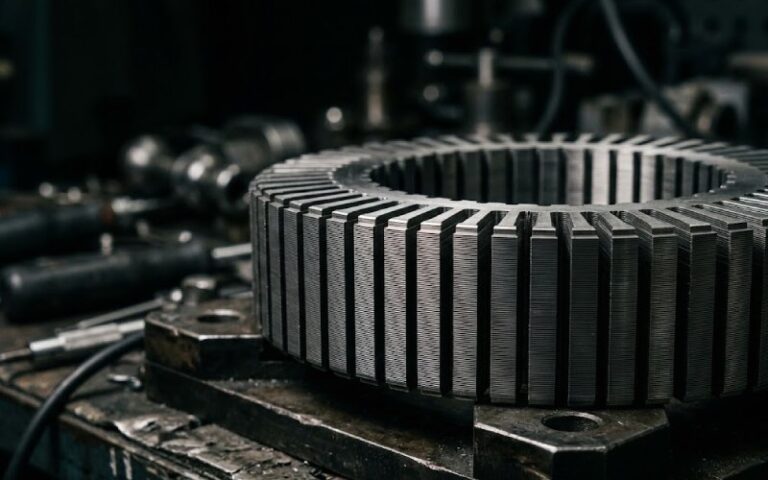
Cut edges, slot entries, punched holes, and reworked areas deserve more attention than they usually get. Burrs and coating damage can create conductive bridges between sheets. Once that happens, the stack starts generating local loss instead of just carrying flux.
Dirty fan paths, blocked passages, and weak cooling can push a healthy stack into an unhealthy temperature range. That extra heat also speeds the damage already started by moisture or cycling. Sometimes the motor is not undersized. Sometimes it just cannot breathe.
Vibration is not only a bearing or alignment issue. In a lamination stack, vibration can help wear insulation surfaces, relax contacts, and worsen local fault growth over time. If the machine is vibrating and running hot, those symptoms should be read together.
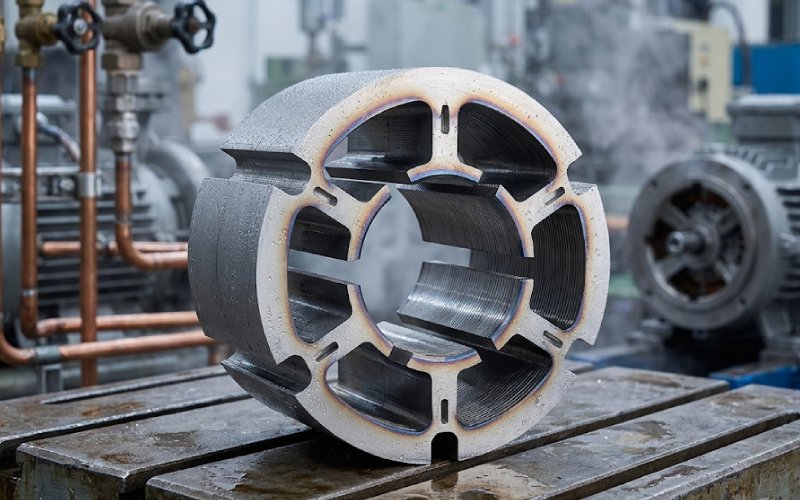
No. Surface rust alone does not prove lamination failure. The real concern is whether moisture, contamination, or coating damage has reduced electrical separation between sheets or changed the stack’s heat path.
Often yes. Continuous duty allows the motor to reach thermal equilibrium. Intermittent duty keeps pushing the machine through heating and cooling cycles, and that repeated cycling accelerates insulation and interface damage.
Because idle motors in humid service can absorb moisture during cooldown. When restarted, they face inrush, temperature rise, and electrical stress before that moisture-related weakness is gone. That combination is rough on both insulation and the core system around it.
Not if the core already has interlaminar faults, edge-bridge damage, or thermal damage in the stack. A new winding placed next to a damaged core can end up back in the same trouble. Core condition has to be checked as its own failure mode.
Usually this: keep idle motors dry and warm enough to stay above dew point, then reduce unnecessary starts. That combination cuts two of the biggest stressors at the same time.
Ask about edge quality, joining method, coating durability, stack tightness, and how the build protects interlaminar insulation under cycling, vibration, and humid standby conditions. Those details affect loss, heat rejection, and service life more than a generic material claim does.


 English
  German
  Spanish
  French
  Italian
  Japanese
  Korean
  Dutch
Dutch  Indonesian