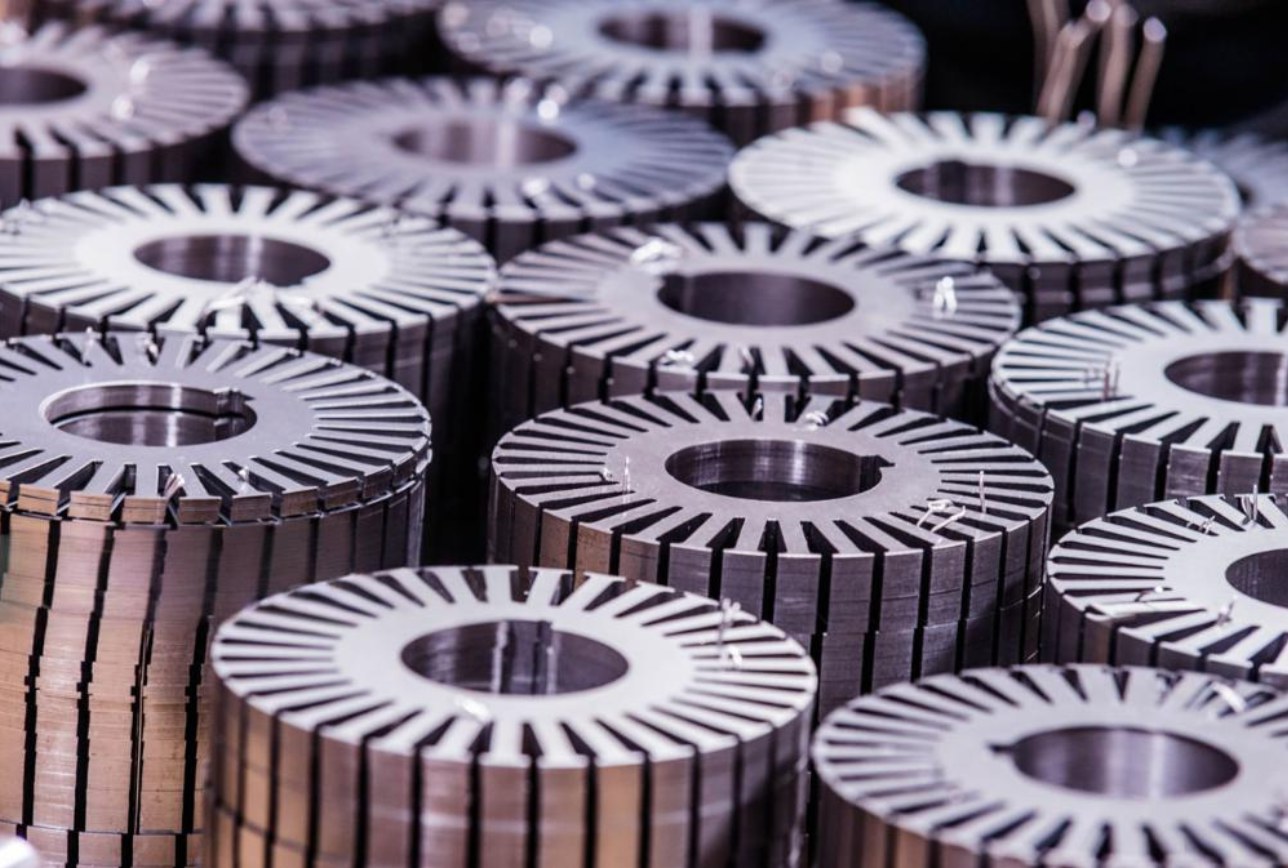
It starts with careful processing of the steel coil, followed by advanced heating techniques that are very important for getting the magnetic qualities we want.
Annealing Technologies
- Continuous Annealing Lines (CALs): Our CALs can lower core loss by up to 15–20% in 0.20–0.35 mm cold-rolled non-oriented electrical steels compared to older heating methods. This is because of even temperatures and controlled cooling. CALs are also 2–3 times faster and save up to 25% energy per ton.
- Vacuum Annealing: We use vacuum annealing to greatly increase initial permeability (up to 30% higher than air-heated samples) and remove almost all carbon (<0.002% C), which is vital for high-frequency motors. This process prevents oxidation between grains, keeping them strong.
- Rapid Thermal Annealing (RTA): For thin-gauge (≤0.18 mm) laminations, RTA helps grow a specific grain structure (Goss texture, {110}<001>). This is linked to lower hysteresis loss and better magnetic induction (B50 up to 1.85 T at 5000 A/m).
- Atmosphere Control: We use controlled H2/N2 atmospheres (e.g., 75% H2, 25% N2) to improve carbon removal and surface quality. This is especially important for very thin laminations (<0.20 mm) where surface oxidation can hurt magnetic qualities.
Microstructural Control
Our heating processes are carefully controlled to improve the material’s internal structure. Continuous annealing at 850–900°C for 2–3 minutes creates a mix of grain sizes (average 30–50 μm), balancing eddy current loss and permeability. We also stop hard particles (Fe3C, MnS) from forming at grain boundaries. This leads to better stress relief and lower magnetostriction, which directly cuts down on noise in high-speed motors.




 German
  English
  Spanish
  French
  Italian