Lassen Sie Sino's Lamination Stacks Ihr Projekt verstärken!
Um Ihr Projekt zu beschleunigen, können Sie Lamination Stacks mit Details wie Toleranz, Material, Oberflächengüte, ob eine oxidierte Isolierung erforderlich ist oder nicht, Mengeund mehr.
Sehr kurze Version:
Wenn Sie also kaufen Lamellen Wenn Sie sich nur auf die Katalognummern stützen, aber das Glühen auslassen, verwenden Sie ein anderes Material, als Sie denken.
Man glüht nicht, “weil es alle tun”. Sie glühen, weil etwas in Ihrem Prozess den Stahl von dem entfernt hat, was das Werk geliefert hat.
Schauen wir uns die einzelnen Situationen an.
a) Halbfertige oder vom Kunden geglühte“ Sorten
Einige Elektrostähle werden in der Erwartung verkauft, dass der endgültige Kernverlust und das B-H-Verhalten erst erreicht werden, wenn der Kunde einen Entspannungszyklus durchführt. JFE's JNA / ähnliche halbfertige Linien und mehrere “N-CORE” / “PNA-CORE”-ähnliche Produkte von Herstellern fallen in dieses Lager.
Wenn es im Datenblatt ausdrücklich heißt:
...dann ist die Verwendung dieser Noten ohne SRA erforderlich:
b) Gewickelte Kerne aus CRGO-Bändern
Wunde Kerne siehe:
Ohne Glühen werden diese Spannungen nicht auf magische Weise abgebaut. Das Vakuum- oder Schutzgasglühen von gewickelten CRGO-Kernen ist Standard, um den Eisenverlust und den Magnetisierungsstrom wieder auf Millimeterwerte zu senken.
Wenn Sie gewickelte Kerne kaufen ohne SRA, behandeln Sie sie als eine andere Verlustklasse als den Rohstreifen.
c) Starke Stanzungen, Schlitzungen oder Mehrfachlochungen
Je mehr Metall verdrängt wird, desto stärker werden die Kanten kaltverformt. Schergeschnittene Bereiche können bis zu einigen hundert Mikrometern von der Schnittlinie entfernt magnetisch “beschädigt” werden, was zu sichtbaren Gefügeveränderungen und härteren Kantenzonen führt.
Wenn Ihr Laminierungsdesign hat:
...dann ist ein Glühen nach dem Stapeln in der Regel die einzige realistische Möglichkeit, die verlorene Permeabilität wiederherzustellen und die lokalen Verlust-Hotspots zu reduzieren.
Sie können viele gestapelte CRGO-Kerne im “as-cut”-Verfahren betreiben und immer noch die Nennleistung erreichen. Aber Sie verschenken möglicherweise Effizienz und Marge.
Typische Literaturwerte für mäßig verformte Siliziumstähle sind:
Diese Art von Delta ist bei einer Einheit mit mehr als 10 MVA nicht gering.
Glühen ist also in der Regel sinnvoll, wenn:
Nicht alles mag eine Reise zu 800 °C.
a) Domänenveredelte / lasergeschriebene Sorten, die nicht für SRA bestimmt sind
Domänenveredelte (lasergeritzte) GOES-Sorten basieren auf Mikrodehnungsmustern auf der Oberfläche, um Domänen zu unterteilen und den Verlust um ~10-15 % im Vergleich zu nicht veredeltem Stahl zu verringern.
Eine klassische Falle: Eine domänenspezifische CRGO ist ausdrücklich mit dem Vermerk “nicht zum Spannungsarmglühen geeignet”. Wenn Sie es trotzdem glühen, werden Sie:
Also: Datenblätter sorgfältig prüfen. Wenn dort steht “für Anwendungen ohne SRA”, glauben Sie es.
b) Baugruppen mit nicht-metallischen Befestigungen, die nicht für hohe Temperaturen ausgelegt sind
Ist einer davon im Kernstapel enthalten?
Sie werden 800 °C in Stickstoff nicht überleben. Das ist offensichtlich, wird aber bei Reparatur- und Umbauszenarien oft übersehen. Wenn der Laminatstapel bereits in eine größere Baugruppe integriert ist, könnte SRA vom Tisch sein, es sei denn, Sie entwerfen das mechanische Konzept neu.
c) Beschichtungen, die nicht für die Wiederverglasung bestimmt sind
Dämmstoffbeschichtungen lassen sich grob in drei Kategorien einteilen:
Nur die erste Gruppe kommt mit wiederholten Hochtemperaturzyklen zurecht. In den Datenblättern von Beschichtungsherstellern wie Aperam und anderen ist ausdrücklich angegeben, welche Beschichtungen die Isolierung nach der SRA aufrechterhalten und welche “nur wie geschnitten” sind.”
Wenn die Isolierung anbackt, reißt oder die Lamellen zusammenklebt, können Sie den Laminierungsfaktor verlieren und zusätzliche mechanische Spannungen erzeugen.
Betrachten wir Ihren Laminierungsstapel als ein kleines Ökosystem. Sie ändern den Wärmeverlauf einmal; mehrere Eigenschaften ändern sich gleichzeitig.
Die wichtigsten Veränderungen, die Sie in den Testdaten feststellen werden:
Die Mühle hat die großen Rekristallisationsschritte bereits vollzogen. Ihre SRA ist hauptsächlich eine “Säuberungsaktion”.”
All dies macht CRGO nicht zu Butter, aber es macht den Laminatstapel im Betrieb und bei der endgültigen Kernmontage weniger zerbrechlich.
Die folgenden Zahlen sind keine Spezifikation. Es handelt sich um typische Werte, die in der Literatur und in der Praxis zu finden sind, wenn man einen einigermaßen verformten Stapel vollständig verarbeiteten CRGOs nimmt und dann einen guten SRA-Zyklus durchführt (etwa 800 °C in nicht oxidierender Atmosphäre für einige Stunden). Die tatsächlichen Ergebnisse hängen stark von der Sorte, der Verformung und der Ofendisziplin ab.
| Eigenschaft (bei ~1,5-1,7 T, 50/60 Hz) | Wie-geschnitten / wie-gewickelt (indikativ) | Nach dem Spannungsarmglühen (indikativ) | Design-/Beschaffungshinweis |
|---|---|---|---|
| Kernverlust, W/kg | 1,1-1,3 × Katalogwert | 0,95-1,05 × Katalogwert | SRA kann eine “grenzwertige” Verlustzahl in eine sichere Marge verwandeln. |
| Relative Durchlässigkeit | 0,7-0,9 × Katalog µ | 0,9-1,1 × Katalog µ | Ein höheres µ senkt den Magnetisierungsstrom und das Kupfer. |
| Magnetisierungsstrom (Leerlauf) | 1,1-1,4 × Ziel | 0,9-1,1 × Ziel | Sichtbar im Werkstest; nützliche Kennzahl für den Lieferantenvergleich. |
| Magnetostriktion / Rauschneigung | Unberechenbar; mehr Streuung | Besser wiederholbar, oft etwas niedriger | Die Prozesskonsistenz ist wichtiger als die absolute Zahl. |
| Eigenspannung in der Nähe von Kanten | Hoch; gehärtete Randzone | Erheblich reduziert | Unterstützt sowohl die magnetische als auch die mechanische Stabilität. |
| Beschichtungsverhalten | Wie angewandt | Geringfügig verändert; anorganisch meist gut | Bestätigen Sie, dass die Beschichtung für die SRA-Bedingungen geeignet ist. |
Auch hier gilt, dass es sich um Größenordnungen handelt, nicht um Versprechen.
Sie werden den Ofen vielleicht nicht selbst betreiben, aber die Entscheidungen Ihres Lieferanten werden in Ihrem Prüffeld zu sehen sein.
In der Praxis sind die industriellen SRA-Zyklen für GOES noch nicht abgeschlossen:
Zu niedrig: unvollständige Erholung. Zu hoch oder zu lange: Vergröberung des Korns, Beschichtungsprobleme oder unerwünschte Veränderungen der Textur.
Für den Einkauf brauchen Sie keine exakte Kurve - Sie müssen nur wissen, dass das Rezept Ihres Lieferanten kein 20-minütiges Blitzbacken ist.
In Datenblättern und Verfahrenshinweisen wird immer wieder darauf hingewiesen:
Fragen Sie Ihren Lieferanten:
Große Kerne mögen keine Temperaturschocks.
Wenn Sie große Leistungstransformatorenkerne kaufen, sollten Sie von Ihrem Lieferanten erwarten können, dass er über ein Laminat verfügt:
Wenn Sie Laminierungsstapel oder -kerne spezifizieren, finden Sie hier eine kurze praktische Liste. Sie können sie fast wie eine Gesprächsrunde mit Ihrem Lieferanten behandeln.
Dies ist der Unterschied zwischen einem “CRGO-Kern”, der der Zeichnung entspricht, und einem, der Ihnen in jeder Stunde seines Lebens leise Watt und Kupfer spart.
Normalerweise nicht ideal.
Kantenbelastung durch Schneiden wird angesprochen, ja.
Durch das Einspannen und Stapeln können aber auch kleine Spannungen und Verformungen entstehen.
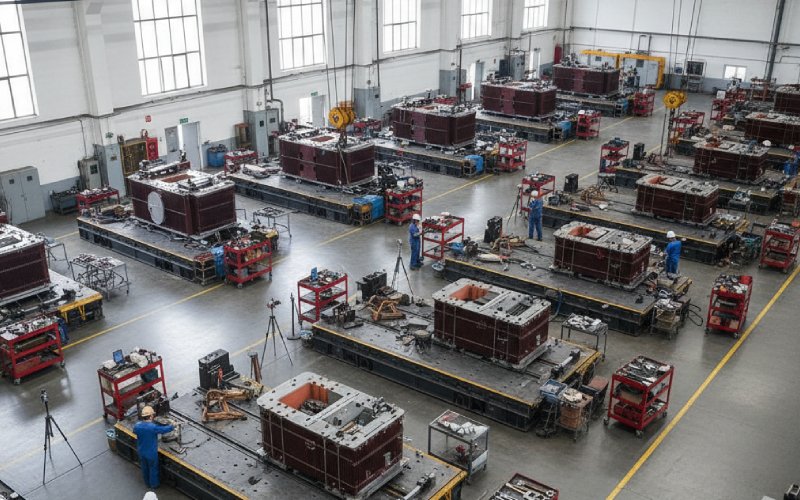
Viele Hersteller betreiben SRA nach Zusammenbau von gewickelten oder gestapelten Kernen, was dem Betriebszustand des Kerns besser entspricht.
Wenn die Ofenkapazität oder die Vorrichtungen begrenzt sind, besteht ein Kompromiss darin, Unterbaugruppen (Schenkelpakete, Joche) anstelle einzelner Lamellen oder vollständig montierter Behälter zu glühen.
Nein.
Szenarien für mögliche Verluste nicht verbessern oder sogar verschlimmern können:
Sie glühen eine domänenveredelte Sorte, die nicht für SRA spezifiziert ist → Sie löschen den Vorteil der Domänenveredelung.
Der Ofen überschreitet die Temperatur oder die Zeit, was zu unerwünschtem Kornwachstum oder Beschichtungsproblemen führt.
Die ungleichmäßige Temperatur in großen Kernen erzeugt neue innere Spannungen.
Wenn der Zyklus auf die Sorte und die Geometrie abgestimmt ist, ist die Verringerung des Kernverlustes das normale Ergebnis, aber es ist nicht automatisch.
Grob gesagt:
Walzglühen / Walzendglühen Wird vom Stahlhersteller bei der Bandherstellung vorgenommen.
Legt die primäre Goss-Textur und die magnetischen Basiseigenschaften der Spule fest.
Spannungsarmglühen (SRA) Erfolgt durch den Kern- oder Transformatorenhersteller nach dem Schneiden, Stanzen und Stapeln.
Er beseitigt vor allem die Schäden, die während des Herstellungsprozesses entstanden sind.
Bei der SRA geht es darum, das Material so weit wie möglich an die Ausgangssituation des Werks anzugleichen, nicht darum, eine völlig neue Sorte zu schaffen.
Sie kann, Aber wenn die Effizienzvorgaben knapp bemessen sind, sollten Sie das wahrscheinlich nicht tun.
Verschiedene CRGO-Sorten und Beschichtungen werden unter unterschiedlichen SRA-Bedingungen charakterisiert (z. B. 750 °C × 2 h gegenüber 840 °C × 1 h). Die Annahme eines einzigen generischen Zyklus kann:
Unterbehandlung einiger Sorten → Restspannung und höherer Verlust.
Andere überbehandeln → unnötige Kornvergröberung oder Beschichtungsstress.
Eine gute Praxis ist es,:
Gehen Sie von dem vom Werk empfohlenen SRA-Fenster für die jeweilige Sorte aus.
Validieren Sie Ihre eigene Kerngeometrie (messen Sie W/kg und Magnetisierungsstrom nach SRA).
Indirekt.
Wenn Beschichtungen erweichen oder kleben, können sich die Laminierungen dichter zusammenfügen → etwas höherer Laminierungsfaktor, geringerer Luftgehalt.
Wenn sich Kesselstein oder Oxidation ansammeln, kann das Gegenteil passieren.
Eine gut kontrollierte SRA in einer neutralen oder leicht oxidierenden Atmosphäre soll den Laminierungsfaktor innerhalb der Katalogeinstellungen halten und gleichzeitig die Isolationsfestigkeit erhalten.
Bei Designs mit engen Toleranzen lohnt es sich, die Stapelhöhe vor und nach dem Glühen an einer Musterstrecke zu überprüfen.
Für CRGO-Laminierungen in Trafokernen, SRA typischerweise reduziert Härte und verbessert die Duktilität ein wenig. Das ist normalerweise vorteilhaft: weniger spröde Kanten, weniger Rissgefahr.
Eine strukturelle Schwächung, wie sie bei einigen Strukturlegierungen auftreten kann, ist nicht zu erkennen. Das Blechpaket wird nach wie vor mechanisch durch Rahmen, Klemmen und die umgebende Struktur gestützt.
Eine einfache Möglichkeit ist die Kombination von Leistung und Referenzbedingungen:
“CRGO-Laminatstapel müssen spannungsarm geglüht werden. Der Kernverlust bei 1,7 T, 50 Hz und Magnetisierungsstrom darf X W/kg und Y A, gemessen an vollständig montierten Kernen nach dem Glühen, nicht überschreiten.”
“Die Bedingungen für das Spannungsarmglühen müssen innerhalb des vom Lieferanten der Sorte empfohlenen Fensters liegen (z. B. 750-840 °C, 1-4 h, nicht oxidierende Atmosphäre).”
So bleibt die Kontrolle über die magnetische Leistung erhalten, während Ihr Laminierungslieferant die Möglichkeit hat, seine eigenen Ofenpläne zu optimieren.



 German
  English
  Spanish
  French
  Italian
  Japanese
  Korean
  Dutch
Dutch  Indonesian